Earlier this year, Mati Carbon won the first prize worth US$50 million in the Carbon Removal XPrize. The competition, sponsored by the Musk Foundation, attracted Mati and many others to enter. Lasting four years and involving several milestones, Mati beat out submissions from France, Brazil, the United States, the United Kingdom, Canada and the UAE. Runners-up received prizes from $1 to $15 million.
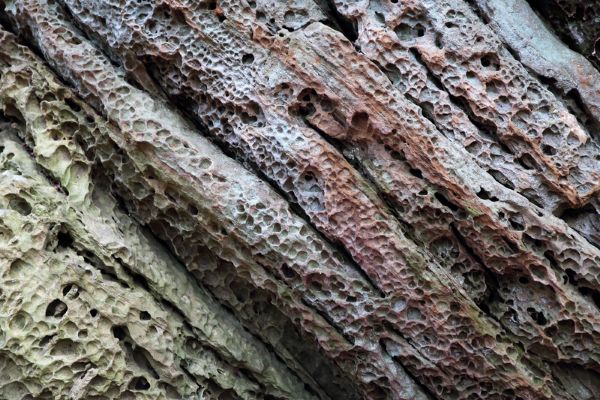
Mati’s winning solution is Enhanced Rock Weathering (ERW), which emulates natural rock weathering processes, the breakdown of surface rocks by physical, chemical and biological processes as distinct from erosion by wind and water. The carbon capture process begins with the interaction of carbon dioxide (CO2) with rainwater. The combination creates carbonic acid, which, upon contact with silicate minerals, converts to bicarbonate and carbonate ions to form soil. With ERW, human intervention adds mining and grinding of rock to the weathering process. The ground material is then spread on fields where it is stored, taken up by plants or washed into aquifers, rivers, lakes and oceans. Mati’s technology is designed to sequester CO2 for more than 10,000 years. The technology is scalable.
To finish first in the XPrize, Mati was able to partner with more than 16,000 smallholder farmers who earned more than $4 million from special carbon credits called CORCs. The remineralization process involved crushed basalt spread on smallholder farms in India, Zambia and Tanzania, covering more than 8,500 hectares (21,000 acres) of farmland. The mineralization enhanced soil quality and boosted crop yields.
ERW, as a carbon mitigation technology, fits into the broader category known as CDR, a range of technologies designed to extract CO2 from the atmosphere for long-term storage of carbon in soils, the ocean, aquifers, and products. CDR technologies are among a number of climate change mitigation strategies that include CCS (carbon capture and sequestration), CCU (carbon capture and utilization), and DAC (direct air capture and storage of carbon dioxide).
The competition was launched in 2021, offering total prizes worth $100 million. It described the challenge for contestants to develop “durable, scalable solutions that pull carbon dioxide from the air or oceans and lock it away permanently and sustainably.” By the end of 2024, all of the contestants, using various processes, were able to remove and sequester 800,000 tons of CO2.
Mati partnered with Yale University during the competition. They also worked with Puro.earth, the issuer of ERW carbon removal certificates. That’s where CORCs come in. A CORC represents a ton of captured CO2. It is calculated using seven different metrics that include dissolved inorganic carbon from soil samples and water runoff analysis. CORC credits are purchased through auctions and trades in the marketplace. The average price per CORC in November 2025 was US$155.15. The buyer network for CORCs involves almost 698 purchasers and 14 partners. Notable buyers have included Microsoft, Shopify and Zurich Insurance. Puro.earth states that through its issuing of CORCs, it has helped to remove almost 1.5 million tons of CO2 from the atmosphere.
Compared to the enormity of anthropogenic carbon emissions to date, 1.5 million tons is just a drop in the ocean, but it is an important step in the creation of a viable mitigation strategy to address climate change. Based on a paper appearing in Environmental Science & Technology in May of 2025, ERW is described as a “promising CDR strategy for mitigating global warming.” Even though the operational activities of mining, crushing, and transporting the ground rock create carbon emissions, these are more than offset by the sequestering of as much as two billion tons of CO2 annually if deployed over farmland. ERW can also contribute mineralization of forest soils to accelerate reforestation and afforestation projects. Finally, ERW will reduce ocean acidification through the accelerated release of alkaline ions in the crushed silicate rocks. Adding alkaline ions to the ocean counters the carbonic acid introduced from increased CO2 in the atmosphere. ERW, therefore, can make the natural carbon sink of the ocean more robust, increasing the uptake of atmospheric CO2.

 that researchers believe could remove up to 2 billion gigatons of CO2 from the atmosphere annually.)