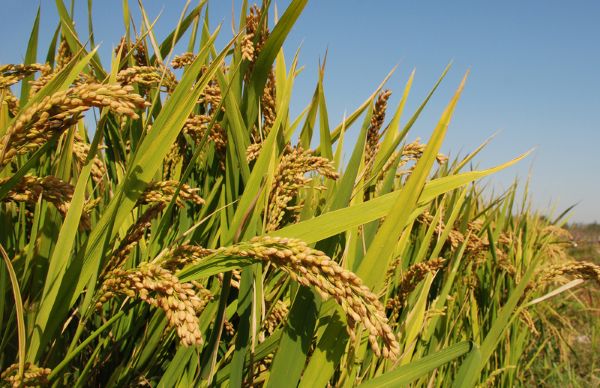
In the face of climate change, with the unpredictability it produces for the growing of food staples, agronomists are looking to genetic manipulation and selective breeding programs to create resilient crops. At the same time, researchers are looking to food staples as a way to solve health issues in populations.
The current challenge of hidden hunger involves two issues: nutrient deficiency in what humans consume, and climate change. Both threaten billions of us today.
The White Rice Problem
In this discussion, we focus on white rice. Work to combat nutrient deficiency has, as a best example, Golden Rice, a genetically-modified variant that provides Vitamin A. As a worst example, there is processed white rice.
White rice is the most common global food staple. It is consumed by half the world’s population, yet unbeknownst to those who rely on it, the traditional way it is harvested to make those beautifully polished white grains has created a dietary problem.
White rice is not natural. It is a processed food. The husk and bran are removed during milling and polishing to give you the white grains. With both husk and bran gone, so are most of the grain’s nutritional value. What’s left is a starchy carbohydrate-laden food that is both sugar and calorie-heavy. What’s gone is riboflavin (Vitamin B2), thiamine (Vitamin B1), Vitamin A, iron, niacin (Vitamin B3) and zinc, all essential to the human diet.
How so?
- A lack of Vitamin B2 causes a condition called ariboflavinosis, associated with malnutrition. It causes lesions on the skin, lips and mouth, and contributes to photophobia, sensitivity to light. It is also associated with anemia and other metabolic diseases.
- A lack of Vitamin B1 lessens our body’s ability to turn food into the energy needed to support overall health, and in particular, our nervous system, heart and other major muscle groups. It can lead to Beriberi and Wernicke-Korsakoff syndrome.
- A lack of Vitamin A is cited as being the leading cause of preventable blindness. White rice diets contribute to half a million children developing childhood blindness annually. That’s why genetically modified Golden Rice was invented. To this day, however, many traditional white rice-eating cultures where childhood blindness is prevalent have resisted legalizing it for planting and harvesting.
- A lack of dietary iron causes anemia. A lack of niacin causes Pellagra, characterized by three Ds: dermatitis, diarrhea and dementia. Untreated, it causes a fourth D: death.
- A lack of zinc affects our body’s metabolic, digestive, nervous and immune systems because zinc is essential to more than 300 proteins in our body.
Zinc Deficiencies In Rice-Dominant Diets
Since our body doesn’t produce zinc, researchers at the Alliance of Bioversity and the International Center for Tropical Agriculture in Colombia, South America, have been investigating how to incorporate it into rice, a major staple in the diets of Colombians and other South Americans.
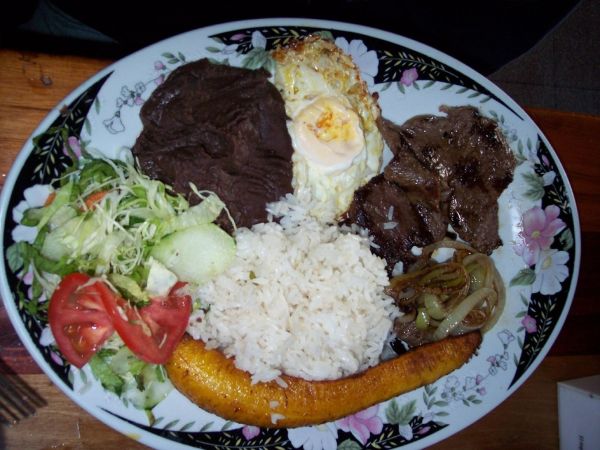
A zinc-enhanced rice, BIOZn035, has been developed through selective breeding. Zinc deficiency is high in populations within Central and South America. Rice is the major food staple in Colombian diets, as it is in other Central and South American countries. When my wife and I visited Costa Rica, the amount of white rice consumed daily by Ticos and Ticas, the name of Costa Rican natives, in what they called the “typical meal” (see picture below) was enormous. In talking to the many Colombians we met in Costa Rica, rice consumption is not that different in Colombia.
The work being done in Colombia is not limited to research on biofortified rice. Other common food staples, beans, cassava, corn (maize), sweet potato, and wheat, are also being studied for biofortification. Maria Fernanca Alvarezy, Director of the Alliance of Biodiversity, states, “Colombia is facing persistent hunger and nutrition challenges, particularly in rural and coastal areas. Our current collaborations on biofortification hope to provide farmers and the government with more options that can replicate the successes of BIOZn035.”
White Rice and Type 2 Diabetes
Another challenge for white rice-dominant diets is the rise in Type 2 Diabetes. This is happening because white rice has a high glycemic index, meaning it contributes to increased blood sugar levels in the body.
Knowing that it is more difficult to change consumer habits such as diets heavily reliant on white rice, researchers see genetically modified or biofortified versions of white rice as a better solution than trying to get these populations to switch to varieties with lower glycemic indices.
Recent research at the International Rice Research Institute (IRRI), located in the Philippines, a country where Type 2 Diabetes is on the rise, with 7.5% of its adult population exhibiting high-glycemic indices associated with a heavy white rice diet. In 2000, 1.2 million adults in the Philippines had Type 2 Diabetes. In 2021, the number increased to 4.3 million. Based on current trends, Filipinos with Type 2 Diabetes will reach 7.5 million by 2045. That’s why the IRRI has prioritized the development of rice varieties to support healthier diets for its population. IRRI’s other research focuses on creating climate-change-smart rice varieties and working with farmers globally to develop sustainable farming practices.

