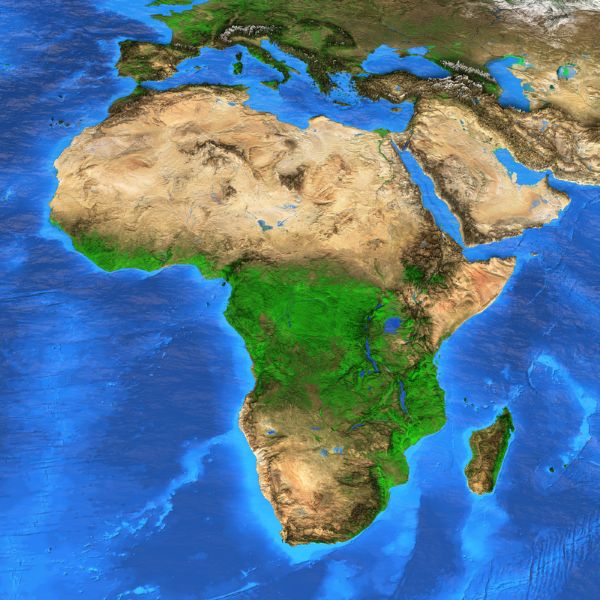
The continent of Africa contributes 2 to 3% of global carbon emissions but disproportionately suffers far greater from amplified heatwaves, droughts and catastrophic floods. It is warming faster than the global mean rise. Listening to voices from Africa, therefore, should be important for those who attended the COP30, recently concluded in Belém, Brazil.
An African’s Take On Climate Change Action
Laura Pereira is a professor at the Global Change Institute, University of Witwatersrand in South Africa and a researcher at the Stockholm Resilience Centre. Her area of expertise focuses on sustainability transformations and the future.
Pereira wants to see more African involvement in discussions about climate and environmental change, exploring transformative pathways to support sustainable jobs and a resilient future. Pereira states that the climate agenda shouldn’t just focus on carbon as a metric. Nature, biodiversity and people need to be brought into the equation.
Pereira sits on the Earth Commission and serves on the IPBES, an independent South African intergovernmental body focused on science policy.
Pereira was in Belém at COP30. She spoke to University World News (UWN) about the need for more African voices in shaping global climate policy. Her work on the climate change file includes studying the indigenous knowledge of Africa’s peoples, developing strategies to support biodiversity, and assisting local communities with climate mitigation and adaptation. The focus is not on sequestering carbon.
Pereira noted that climate change mitigation financing remains critical for Africa, stating:
“Africa is one of the most climate-vulnerable regions in the world, and getting adaptation financing right is absolutely critical. From a South African perspective, the just transition is also central, especially questions around how to finance a fair energy transition that does not leave people behind, even as we shift toward renewable energy systems.”
Did COP30 Achieve African Goals?
COP30, called the Nature COP, took place near the mouth of the Amazon River. The rainforest was right there for the delegates to experience. Pereira noted that, like Amazonia, much of Africa is vulnerable to climate change with similar biodiversity and ecosystems. Stated Pereira,
“Ensuring these ecosystems are protected, both from climate change and from poorly designed mitigation interventions, is another critical aspect that needs to be accounted for.”
Pereira sees a much larger global role for African researchers to keep global warming in check. To date, African data remains underrepresented in existing climate models, projections, and impact assessments. Pereira further noted that until recently, few African universities had standing in the COP proceedings and called for the strengthening of the relationship with the African Group of Negotiators (AGN), a coalition of nations providing scientific expertise and evidence. Among these are the University of Nairobi, in Kenya, University of Cape Coast, in Ghana, University of Lagos, in Nigeria, Makerere University, in Uganda, and, of course, her alma mater, Witwatersrand, in South Africa. Pereira stated that these universities “can help break traditional development paradigms tied to fossil fuels and explore transformative pathways that support sustainable jobs and resilient societies.”
If you need more information about COP30 and what it did and didn’t accomplish, I refer you to a previous posting on this blog site.
COP30, Climate Change, and Africa Today And Tomorrow
African voices need to be heard more, according to the World Meteorological Organization (WMO). Why? Because climate change is warming faster in Africa than the global average.
In 2023, Celeste Saulo, Secretary-General of the WMO, stated:
“Over the past 60 years, Africa has observed a warming trend that has become more rapid than the global average. In 2023, the continent experienced deadly heatwaves, heavy rains, floods, tropical cyclones, and prolonged droughts. While many countries in the Horn of Africa, southern and North-West Africa continued to suffer exceptional multi-year drought, other countries experienced extreme precipitation events in 2023, leading to flooding with significant casualties. These extreme events led to devastating impacts on communities, with serious economic implications.”
Much of the continent has seen more of the same since 2023, with economic disruptions from extreme weather contributing to conflicts over freshwater, farming, fisheries and forestry across the continent. African countries continue to experience 2 to 5% average annual declines in GDP, with national budgets diverted to address climate extremes and adaptation amounting to between US$30 and 50 billion.
Extreme heat, drought, and changes to precipitation patterns have facilitated vector-borne diseases. In some areas, extreme heat is causing insects to move to more temperate latitudes or higher elevations. Diseases include malaria, dengue, chikungunya, schistosomiasis and trypanosomiasis. Climate change is contributing to increased outbreaks, many in places where they never occurred before.
The spread of these tropical diseases strains health infrastructures and financial resources. Mortality levels are expected to increase. A case in point is dengue, spread by the Aedes aegypti mosquito. Today, dengue exists in 15% of Africa. By 2050, the area is expected to grow to between 20 to 25%. By 2070, it will be endemic in over 40 to 55% of the continent.

