The September 11, 2025, issue of The Economist ran a story entitled, “Top Gun – without Maverick.” It included a quote from Mark Milley, who headed up the U.S. military from 2019 to 2023, describing how aircraft carriers, the home of the American Navy’s potent air arm, will be a relic of the past within 20 years.
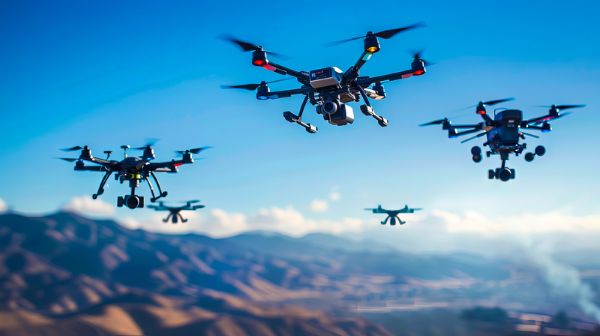
What the Russia-Ukraine war has shown is that fighter jets will likely follow the path of battleships in wars fought in this century. The reason is the evolution of drones, which are easy to deploy, inexpensive to manufacture, and capable of operating in swarms to overwhelm air defences.
Uncrewed weapon systems have been around for a long time. Balloons, originally used for reconnaissance during the Napoleonic Wars and in the American Civil War for the same purpose and to direct artillery fire, were armed and used with limited success by Austria-Hungary in the mid-19th century.
In 1898, Nikola Tesla demonstrated a drone torpedo boat to the New York City press. Tesla argued that wars would end when even “the most feeble of nations” could produce drone ships to turn back even the most powerful fleet of ships from invading them. This was before the Wright brothers’ first flight.
Within five years, the first pilotless aircraft were on the drawing boards and with the invention of Lawrence Sperry’s gyrostabilizer in 1913, it made it possible to fly an airplane in a straight line without a pilot present.
It was Archibald Low, dubbed “the father of the drone,” a British engineer, who attempted to demonstrate the potential use of pilotless aircraft as a flying bomb in 1918. It flew less than 100 metres before crashing. Low used radio-controlled flight in this first demonstration. By 1923, the French military was demonstrating remotely piloted drone aircraft, and even though the program was successful, it was later cancelled.
A modified radio-controlled pilotless de Havilland Tiger Moth trainer called the Queen Bee was developed by the British military in the 1930s and was used for anti-aircraft training. It inspired the American Navy to create a similar pilotless drone for naval gunnery practice. By 1937, Reginald Denny, a former Brit who emigrated to the U.S., started building radio-controlled pilotless model aircraft. The first unmanned aerial vehicle (UAV), the Radioplane OQ-2, designed for hobbyists, was soon being used by the U.S. military for target practice.
In World War 2, the American military experimented with unpiloted aircraft that could counter the kamikaze attacks of the Japanese military. One, a twin-engine airplane was capable of delivering a bomb or torpedo to targets 680 kilometres (425 miles) away. After the war, pilotless aircraft were used to fly over nuclear bomb test sites to record the results.
During the Cold War with Russia, the U.S. flew drone helicopters to track the position of Soviet submarines. The Americans used drones during the Vietnam War. Drones flew in the Iraq War and in Afghanistan. But it is the Russia-Ukraine conflict and Israel’s wars with Hamas and Hezbollah that have created the first Wars of the Drones with weaponized UAVs becoming a military disruptor of consequence.
The Russia-Ukraine conflict began with Ukrainian drones acting as artillery spotters, but soon evolved into kamikaze UAVs. Russia soon began importing mass-produced Iranian drones in response, with both sides using swarm tactics to try to overwhelm aerial defence systems. Ukraine is using drones for anti-tank and trench attacks as well as in strikes deep into Russia, targeting energy infrastructure and airfields. At the same time, it is using marine drones to strike Russia’s Black Sea Fleet with considerable success. Russia combines kamikaze drones with hypersonic missiles in attacks on Ukrainian infrastructure and cities.
Israel has used surveillance and weaponized UAVs in its wars against Hamas in Gaza and Hezbollah in Lebanon. Both of Israel’s adversaries have used drones for surveillance and small-scale attacks on Israeli ground forces and installations. In the conflict with the Houthis, Iranian-supplied drones have been used to attack shipping in the Red Sea and sites as far as Israel. Israel has been intercepting drone threats and sending crewed fighter bombers in response. With the latest Iran-Israel conflict, both sides have used drones for surveillance and direct attacks, including Israeli strikes on Syria, an Iranian proxy until recently.
When Tesla described the drone as a defence for the most feeble of nations, he was absolutely on the money. The relative cost of fighting a war with UAVs versus fighter jets and bombers is dramatically different. Drones are just way cheaper. Today’s state-of-the-art fighter jets like the Lockheed Martin F-35 come with a hefty price tag approaching US$100 million per aircraft, not including lifecycle maintenance, which can triple the total cost over an estimated 30 years of use. The operating costs per hour can be as high as US$50 thousand.
Compare that to UAVs. The Reaper is probably the most expensive drone used by the American military, coming in at US$32 million. Most military drones, however, cost well below a million, with non-military commercial drones that can be modified for surveillance and attack costing as little as US$2,000.
The economic imbalance is stark. Against expensive Russian aircraft, Ukraine has launched drone swarm attacks at little cost. Swarms make traditional anti-aircraft defences vulnerable, and some would even say, unsustainable.
A technology strategy being explored today by the American and other militaries is the integration of drones acting as wingmen to fighter jets and bombers for coordinated campaigns. The drone swarms can be fitted with artificial intelligence (AI) capable of adapting to battlefield conditions while supporting crewed aircraft that would act as command centres. For fighter jets and bombers, drone swarms will extend their capability to manage a much larger field of view while minimizing the human risk. Even when many drones get lost in such operations, AI-equipped drones will be capable of self-organizing to support the completion of mission objectives. Called a force multiplier, the advent of the war of drones will make it cheaper to launch or defend in 21st-century conflicts.

