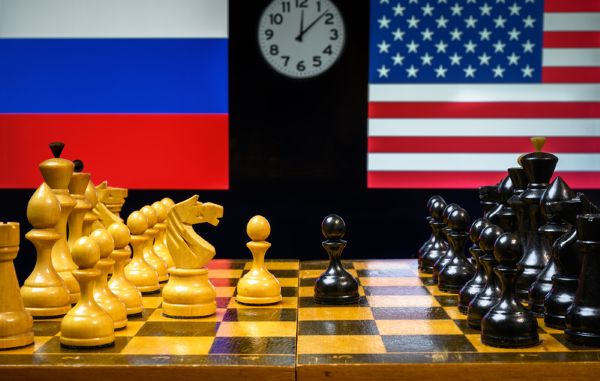
The first week of 2026 has passed, and if it is any indicator of how the rest of this year unfolds, let alone the rest of the decade, we are in for a rollercoaster ride. The geopolitics of the 21st century has become increasingly complicated. Looking back to the 1990s, with the end of the Soviet Union, some have described it as the end of history. How nonsensical.
The Soviet Union’s collapse created a void, and nature and politics both abhor a vacuum. When empires fall, new players step in, and that’s exactly what we have witnessed in the rise of a new Russian empire since 2000, led by Vladimir Putin.
Could a futurist have predicted the direction Russia would take? Maybe some could, but in this first part of a three-piece discussion on geopolitical change in the 21st century, we will look at just how a failed Soviet state turned into a Russia gone rogue.
To learn about the decline in the lustrous beacon that is America, you will have to read Part Two, while Part Three looks at China’s rise with parallels to Japan from the late 19th century to the mid-20th century.
The Rise from Soviet Ruin – Russia Gone Rogue
For Western democracies and Europe, the collapse of the Soviet Union was an opportunity for the North Atlantic Treaty Organization (NATO), the post-World War II defensive alliance formed to counter Soviet expansionism. Countries, formerly under Soviet control, moved into Europe’s and NATO’s embrace. The Soviet collapse was seen equally as an opportunity for America and China to reset their relationships with the Soviet successor states.
NATO and the European Union expanded. The U.S. confined its interests to economic opportunities and to supporting NATO countries. China saw the Soviet collapse as a cautionary tale. The rump Russian Federation, having lost vast swaths of its former Soviet sway, veered from one crisis to another.
The vacuum left by the Soviet collapse could have been filled by Europe, America, China or Russia. In the end, it was the latter that stepped forward.
The 1990s saw Russia slip from aspiring democracy to oligarchy and autocracy. With the Communist Party’s fall and the dissolution of the Soviet state, former bureaucrats cherry-picked the corpse. A superrich new oligarchy ended up rallying around and a former KGB operative, Vladimir Putin, who eventually became President. He has subsequently ruled Russia throughout this century.
Putin’s Agenda for Russia
Putin has described the Soviet collapse as an epic tragedy. He believes that the former socialist republics that formed the Soviet Union were a convenience and a charade presented to the world by the Communist Party. As a result, Putin has shown regard for the sovereignty of the countries that emerged from the Soviet demise. He questions the legitimacy of Ukraine, Georgia, Armenia, Moldova, Estonia, Lithuania, Latvia, and the Central Asian republics carved from the old Soviet state. Russia’s foreign and domestic policies support Putin’s aspirations to restore the empire. He has been grabbing land for the last two decades: first in Georgia, then Armenia and Azerbaijan, supporting Transnistrian separatists in Moldova, seizing the Crimea from Ukraine and subsequently backing separatists in the Donbas. Since 2022, Putin has launched a march on Kyiv that failed and an invasion of Eastern Ukraine with a goal to first, topple the government, and second, to reabsorb what he considers an illegitimate country back into the Russian motherland. Putin’s war is entering its fourth year.
When confronted by critics, of which there are none in Russia, Putin justifies his expansionist agenda by pointing to NATO’s eastern expansion since the fall of the Soviet Union and the threat it poses. Putin, when threatened, waves the nuclear option in the face of NATO opponents and others.
Trump’s Russia Agenda
Since Trump was re-elected in 2024, he promised almost immediate peace between Russia and Ukraine. That was unworkable. Now, Trump is looking for a way out that robs Ukraine of territory and rewards Putin for aggression. Trump has lobbied the Nobel Peace Prize committee to recognize his unparalleled skills as a peacemaker.
In the absence of making peace, however, there is nothing for the Committee to recognize. When Trump doesn’t succeed, he will blame others. At best, any Trump-generated peace will be temporary at best, and likely to lead to more war. For Putin’s Russia, therefore, the climb back to past greatness will remain unresolved. And that’s where we sit today, on the 9th day of January, 2026.

