In Part 2 of Geopolitical Change Dominating This 21st Century Decade, the United States is in the crosshairs. On the first Tuesday in November 2024, Donald Trump returned to the White House. With his interrupted agenda renewed, Trump has demonstrated that he is out to get even with all political enemies, both foreign and domestic. In the last few days, Trump has displayed increasing belligerence. He okayed a raid by American special forces to capture Venezuela’s head of state, Nicolás Maduro. This act has won him praise from supporters and condemnations from his detractors, and it appears this is just the beginning as Trump, in his second term, is increasingly governing without guardrails. That’s why in Part Two of our discussion on geopolitical change in the 21st century, our topic focuses on an America gone rogue.
America, No Longer The Shining Beacon
In Part 1, we examined the aftermath of the Soviet Union’s dissolution on December 25, 1991, and the ensuing power vacuum. The opportunity presented to the United States to fill the void left by the Soviet collapse came and went. At the time, George H. W. Bush was President. He chose diplomacy and economic aid as strategies to support a Russian transition to democracy. It appeared that Western liberal democracy had finally triumphed, with the U.S. the epitome of the meaning. An essay written during that time by Francis Fukuyama, a political scientist, argued that the end of the USSR and the triumph of liberal democracies equated with the end of history. Far from it, a lot of history has ensued since that date, much of it a consequence of the void left by the Soviet state’s demise.
America’s Global Interests
When one looks at the American empire, in many ways it is very different from any that preceded it. America hasn’t projected power through overseas conquests. Instead, its power often comes from ideas and values and from negotiations and conferring with others.
In the 1956 musical, Li’l Abner, there is a song, “What’s Good for General Bullmoose,” based on comments made by Charles Wilson, the CEO of General Motors, who became President Eisenhower’s Secretary of Defense from 1953 to 1957.
During a Senate hearing, Wilson stated that he thought what was good for General Motors was good for the U.S.A., and vice versa.
American administrations in the post-World War II world often appeared to act with similar conviction, extending the idea that what was good for Americans was equally good for the world. It didn’t always prove true, but for the most part, it was a distinguishing quality of America’s role as “primus inter pares,” a leader among equals in the community of nations.
That no longer appears to be the case under Trump, who appears to act on the premise that what is good for him is good for America and the world.
America: Isolationist or Expansionist
A book by Daniel Immerwahr, How to Hide an Empire: A History of the Greater United States, illustrates what a global empire without territory is. It is unlike the empires of the past, such as the British, Dutch, French, German, Italian, Portuguese, Spanish and Russian Empires. These empires involved conquest, colonization and coercion, bringing vast territories under control. With the U.S., the growth in North America came from land purchases, expropriations of Indigenous lands, and two wars, one with Mexico and the other with Spain.
The last expansionist President, William McKinley (Trump’s a big fan), annexed Hawai’i in 1898, and launched the Spanish-American War behind the slogan, “Remember the Maine,” blaming Spain for an explosion on an American battleship in Havana harbour. The war that followed added several overseas territories, including the Philippines, Guam and Puerto Rico. During McKinley’s presidency, the Alaska Boundary Dispute between the British, Canada, and America flared up, only settled after the President’s assassination.
Immerwahr describes America as an empire defined by economic clout and military resources, pointing to bases, mostly in friendly countries (the exception, Cuba’s Guantanamo), around the world. This hidden empire has held up quite well for much of the latter half of the 20th century and into the 21st. American businesses and a flexible foreign policy have served many foreign countries well, with investments used to develop resources and other forms of soft power.
With Trump back in the White House, soft power appears to be at an end. Starting with the tariff walls erected on Liberation Day based on Trump’s view of unfavourable trade deficits, the President has declared a casus belli against all the nations of the world and even islands where there are no inhabitants. He is using laws that give him emergency powers to act to override Congressional opposition.
Domestically, Trump has unleashed paramilitary forces known as ICE to sweep up citizens and non-citizens, mostly in Democratic-led cities, in search of people to deport. He has launched military missions without Congressional approval, including bombing Iranian nuclear sites, the Houthis in Yemen, sinking boats and killing their crews off South America’s coast, claiming without evidence that they are drug runners, and now, the grabbing of Nicolás Maduro.
The Trump administration recently released its 2025 national security strategy. Trump calls it the Donroe Doctrine, a corollary to President James Monroe’s declaration made in 1823 that claimed American hegemony over the entire Western Hemisphere. Trump sees the hemisphere as reserved exclusively for U.S. meddling, and he has demonstrated it repeatedly in the last few weeks.
David Shribman, who writes for Canada’s Globe and Mail, calls the America of today “a lesson in irony.” What does he mean? He sees Trump taking America back to the policies of isolationism, a 19th-century version of the country that defended slavery when the rest of the world was ending it, and a country that isolated itself from many international forums.
The Proof is in the Pudding
This week Trump signed an executive order to end America’s involvement in 66 international organizations. The U.S. is withdrawing from 31 United Nations-affiliated bodies, the World Health Organization and vaccine advocacy associations, international nature conservancies, oversight of the world’s oceans and freshwater resources, and institutes that support democracy, human rights, education, and relief work.
In his previous term as President, he had pulled the U.S. out of the Paris Climate Agreement of 2015, reinstated by his successor, and now back to not any more.
Trump Demands and Targets Beyond Venezuela
The irony is that while Trump is isolating the United States at the behest of his supporters, he is at the same time openly expansionist.
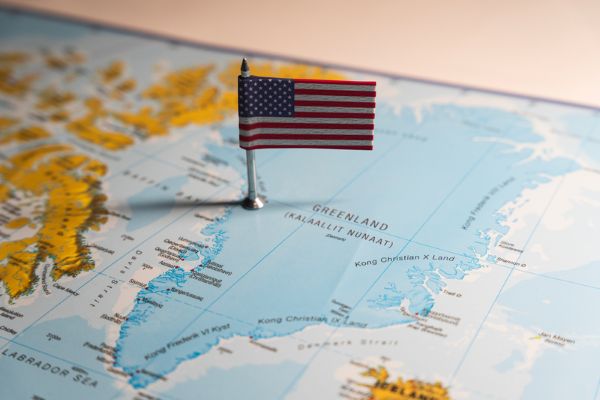
He has declared a desire to own Greenland, which Denmark repeatedly has told him is not for sale. If he cannot have it, he has threatened to conquer it in the name of hegemonic security, even though a U.S. military presence is already in place.
He has offered to make Canada America’s 51st state, noting, if rejected, the use of economic coercion to achieve this goal.
Both Canada and Denmark are NATO allies, an organization that America founded, and that Trump has belittled in the past.
He has threatened to send U.S. troops to Mexico to fight drug cartels even though the Mexican government recently, at his behest, beefed up domestic efforts to address this issue.
In a complete reversal of an agreement he signed in his previous term, Trump is demanding a rewrite of the trilateral trade treaty with Canada and Mexico, or threatening to abrogate it when it comes up for review this summer.
He has asked Panama to return the Panama Canal Zone, acquired by the U.S. in 1903, and transferred to Panama by Jimmy Carter in 1976. The reassertion of American ownership is to keep the Chinese out.
Behind another old score that the President wants to settle is a threat to end the Marxist regime in Cuba, founded in 1959.
In an interview this week discussing Venezuela and other foreign policy issues, Trump, when asked if there were any limits to his reach, stated, “Yeah, there is one thing. My own morality. My own mind. It’s the only thing that can stop me.”

