Sponge-like materials are at the forefront of freshwater harvesting technology breakthroughs. Two research projects, one developing a sponge to extract drinkable water from air, and a second creating a sponge that turns seawater into potable water, represent exciting developments for a world increasingly dealing with freshwater scarcity brought on by global warming and climate change.
Sponge Invented to Harvest Freshwater From the Air
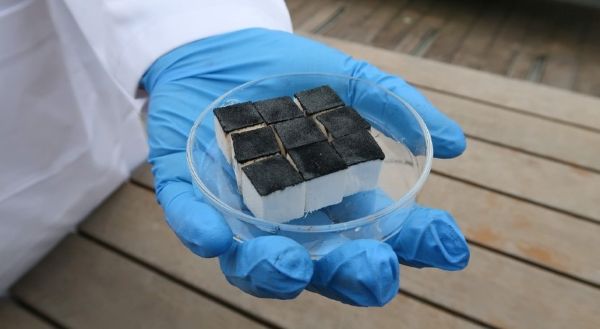
Engineers in Australia and China have invented a sponge that captures water from even the driest desert air, and with solar energy, then releases it for use.
Dr. Derek Hao, from RMIT University in Australia, describes the wood-based composite that uses a modified balsa natural spongy structure to absorb water and release it on demand. He describes the sponge material as “comprising wood’s spongy scaffolding, lithium chloride, iron oxide nanoparticles, a carbon nanotube layer and other specialized features.”
The collaboration involved RMIT and five Chinese research institutes. The sponge material sits in a device that combines artificial intelligence (AI) to accurately predict and optimize water harvesting and discharge performance in the face of different environments. When the device’s lid is open, it absorbs moisture from the air. When the lid is closed, combined with sunlight, water gets released.
Dr. Junfeng Hou from Zhejiang A&F University in China, who collaborated on the invention, notes that the nine-sponge cubes seen in the picture above states, “In outdoor tests, our device captured 2.5 milliliters of water per gram overnight and released most of it during the day, achieving a daily water collection efficiency of 94%. At 30% humidity, our device absorbed water at about 0.6 millilitres per gram. These results highlight its potential use in off-grid, solar-driven water harvesting systems.”
Balsa wood is biodegradable, globally available and cheap. The ability to harvest water using only sunlight means it is portable and capable of operating anywhere. Hao envisions combining their sponge-based water harvester with solar panels and backup energy storage to deliver continuous freshwater to remote communities in the driest areas on Earth. Even when stored at -20 Celsius (-4 Fahrenheit) for 20 days, the water harvester operated efficiently.
A larger pilot project is in the offing. The researchers also intend to use AI to further develop new material combinations that are even more efficient, as well as have the AI help to predict long-term performance.
Sponge Aerogel Invented To Turn Seawater Into Potable Water
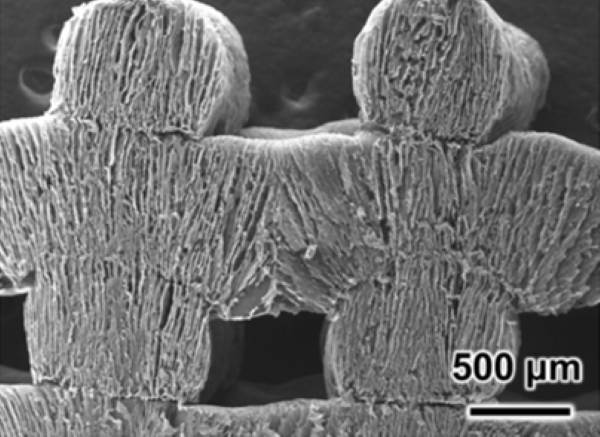
Researchers at The Hong Kong Polytechnic University have invented a sponge-like aerogel filled with microscopic air channels that can harness sunlight to turn saltwater into fresh. In outdoor tests, a simple device containing the sponge and a clear plastic cover produced drinkable water, demonstrating a low-energy desalination process.
Aerogels generally are more rigid than other sponge-like materials, and therefore lose effectiveness when made larger. But in this case, the aerogel demonstrated effectiveness whether small or large. The material consists of a paste containing 3D-printed carbon nanotubes and cellulose nanofibres deposited in layers on a series of frozen surfaces. The vertical holes produced are 20 micrometres wide. Test sizes varied from 1 centimetre (0.4 inches) to 8 centimetres (3 inches) with no loss of evaporative efficiency.
During testing, the material was put in a cup containing seawater and placed outside. A curved transparent plastic cover was placed on top. The sunlight heated the material, causing the water to evaporate and collect as water vapour on the lid. It was then funnelled into a container placed below the cup. Over 6 hours, just using natural sunlight, 45 milligrams (3 tablespoons) of freshwater were harvested.
Xi Shen, one of the six authors of the paper describing the invention, states, it “allows full-capacity desalination at any size, which provides a simple, scalable solution for energy-free desalination to produce clean water.”
For a world increasingly dealing with freshwater scarcity, novel inventions like these provide hope that new technologies will help us cope with the changes the planet is undergoing in the 21st century.

