A good friend sent me an article written by Katie Hunt called “What is mirror life? Scientists are sounding the alarm.” The article described scientific experiments using mirror-image molecules. The creation of these in laboratories and their accidental release could prove a danger to current life on Earth.
Chirality, Mirror Molecules and Life on Earth
What is the threat? It has to do with something called chirality. Chirality comes from a Greek word χείρ (cheir or kheir), meaning “hand.” The term was first coined by Lord Kelvin, a British physicist, whose name is associated with the Kelvin thermometer that starts at absolute zero.
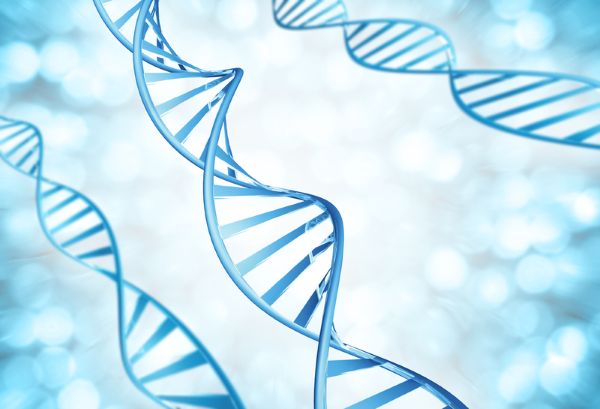
In a published lecture in 1894, Kelvin described chirality: how a reflection in a mirror is not identical to what the mirror actually sees. Watson and Crick used the term to describe the double helix, DNA, pointing out that the right-handed helical clockwise twist was accompanied by the countering left-handed sugars, a chiral construct.
In November 2024, I wrote about life here, favouring molecules with left-handed amino acids and right-handed sugars. A mirror image molecule would have right-handed amino acids and left-handed sugars. Scientists label such hypothetical molecules enantiomers.
Could enantiomers have existed on Earth early in the planet’s history? If they had, could right and left-handed life have found a way to coexist? The fact that we don’t find them suggests coexistence would be impossible, the analogy being putting matter and antimatter together. In other words, total annihilation.
Research on Mirror Molecules and Synthetic Biology
At the University of Minnesota and in other laboratories in the U.S. and around the world, scientists like Kate Adamala have been researching synthetic biology. In her lab, it is funded by the U.S. National Science Foundation. The purpose of the research on mirror cells is that if we can synthetically produce them, it would help to explain how life first emerged on Earth. A secondary goal mentioned states that pursuing synthetic life could yield treatments using small mirror molecules to solve medical and environmental challenges.
Adamala, however, has been questioning, lately, the consequences of creating a mirror of life on Earth. She expresses concerns about synthetic life or mirror molecules escaping from research laboratories. Fictional depictions of such escapes have been the subject of science fiction novels like The Andromeda Strain and Prey. Meanwhile, conspiracy theorists have conjectured about COVID-19, believing it was synthesized in a Wuhan, China laboratory and then accidentally released.
The Mirror Threat
Could mirror life or molecules pose a threat to all life as we know it if developed and released into the wild? A mirror cell contains mirror-image natural molecules. It would mimic normal living cells.
Today, researchers can make many non-living precursor molecules, and it is only a matter of time before a lab somewhere synthesizes single-cell life. Meanwhile, pharmaceutical research is looking at producing opposite-chirality proteins and carbohydrates in pursuit of new medications. Medications based on mirror-image molecules could bypass our body’s immune response, conditioned to recognize molecules with normal chirality. A synthesized mirror cell, similarly, could be undetectable by normal cells.
States Adamala, “Experts in biosafety, immunology and ecology…didn’t think that something like a mirror cell was actually likely, they thought it science fiction.” She readily admits, “I used to think the immune system will find a way to detect any invading biomolecules. I didn’t know how chiral the immune system was.”
A Growing Research Concern
In December 2024, the journal Science published an article entitled, Confronting risks of mirror life, co-authored by 38 research scientists, including Adamala. It noted that our capability to create mirror life “is likely at least a decade away,” noting that this presents an opportunity “to consider and preempt risks before they are realized.” The article stated that “mirror bacteria would likely evade many immune mechanisms mediated by chiral molecules, potentially causing lethal infection in humans, animals, and plants.”
The authors warned, “We cannot rule out a scenario in which a mirror bacterium acts as an invasive species across many ecosystems, causing pervasive lethal infections in a substantial fraction of plant and animal species, including humans. Even a mirror bacterium with a narrower host range and the ability to invade only a limited set of ecosystems could still cause unprecedented and irreversible harm.”
Parallels Between Mirror Molecules and AI
This projected doomsday scenario is reflected in similar observations about artificial intelligence (AI), which has been let out of the bottle by numerous technology companies without creating necessary guardrails.
Laboratories have learned to contain dangerous pathogens like smallpox using biocontainment measures that work. The question is, could the same measures be applied to synthesized life? Would biocontainment protocols even recognize non-chiral life to know it and block it from escaping?
Adamala notes, “At first, people were questioning whether those concerns are actually as serious as we thought they were. And so we were trying to poke holes in it, trying to find ways in which we were wrong. The more we looked, the more we were certain, and more people were coming on board to this idea that there actually is no safe way to make a mirror cell.”
Drawing Mirror Research Red Lines
Some researchers caution against knee-jerk reactions that could stop investigating mirror molecules and their potential medical and scientific benefits. All 38 contributors to the above-mentioned article agree that the red line should be drawn at the creation of synthetic mirror cells. The molecules, however, because they would be undetectable, could be used to deliver life-saving treatments similar to the way the mRNA vaccines for COVID-19 were developed using encapsulated nanolipid drops as carriers within vaccines.
Adamala’s questioning of the research has led to not renewing her grant and ending the work she was doing on mirror cells. Now, her focus is on regulating this research.
She states, “Pretty much everyone agrees that we should not make a living mirror cell. That’s the baseline, but below that, people have a lot of different ideas, where we should stop the research. Right now, the scientific community can’t really agree on the red lines.”
One thing is for certain: the parallels between mirror molecule research and AI are undeniable. Where AI risks would replace humanity with intelligent machines, mirror life threatens us biochemically. Both need rules to address the risks while still seeking potential benefits. The question is, who is best qualified to establish these rules?
With AI, development has been willynilly driven by tech giants. Government response to AI potential threats, so far, has been tepid.
Mirror molecules, on the other hand, are being developed by some in universities and government research labs, while pharmaceutical giants are providing private funding. Mirror cells are an estimated decade away. We have time to put the rules in place on non-chiral life before it becomes driven like AI. Will academics and government give us the guidance and guardrails needed?

