I posted an article in December entitled “We Are Witnessing a Return to 19th and Early 20th Century Diplomacy.” It focused on the principle of national sovereignty defined by the United Nations after World War II. Today, we bear witness to how far the world has strayed from the charter’s words.
Emerging Spheres of Influence
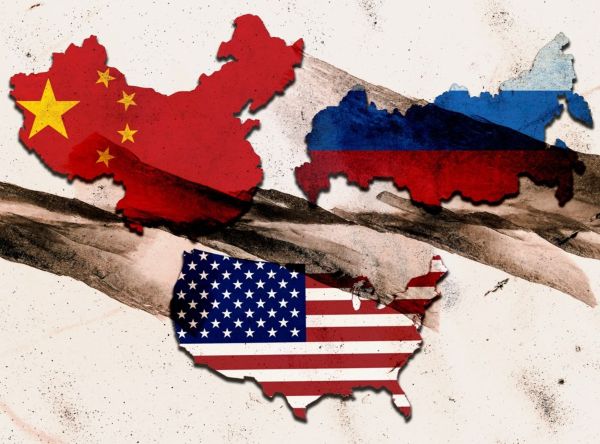
The world is divided into three emerging power blocs backed by military muscle, braggadocio and threats issued from Russia, China and the United States. Increasingly, the remaining nations of the world are being asked to choose sides. At times, Russia and China act in alliance. Meanwhile, the United States, under the present regime, appears to be in retreat from its role as the benign policeman of the West, supporting democracy.
Yesterday, we witnessed might-makes-right “diplomacy” as America bombed, invaded, and extracted Venezuela’s head of government, along with his wife, to face U.S. criminal justice. No United Nations or International Criminal Court warrants were issued. The American administration had defined Venezuela’s leader as a narco-terrorist.
The lead-up to this unilateral act included American bombing of boats and the extrajudicial killings of their crews off Venezuela’s coast, ostensibly to halt cocaine and fentanyl smugglers from getting to the United States and beyond. In subsequent press and social media releases, the American administration neglected to mention illegal drugs as justification, but rather talked about taking Venezuela’s oil as payback for historic grievances.
How different is this from the People’s Republic of China claiming that Taiwan was not a legitimate sovereign nation, or Russia’s claim that Ukraine, equally, was not a nation? Both Russia’s 2022 invasion of Ukraine and China’s threats to absorb Taiwan, therefore, should be seen as more about repatriation than invasion.
America’s Claim to Western Hemisphere Dominance
The United States has a history of enforcing regime change in the Americas. The Monroe Doctrine, proclaimed by President James Monroe in 1823, declared that the United States established the Western Hemisphere of North and South America as closed to outsider colonization, excepting existing European colonies.
President James Polk’s doctrine of American Manifest Destiny, the backing of Texas independence, the Mexican-American War, and the subsequent continent-wide expansion of the United States ran counter to the Doctrine.
Later, President Theodore Roosevelt at the beginning of the 20th century reinterpreted the Doctrine to justify the Spanish-American War as well as interference in other Western Hemisphere nations in Central and South America. Roosevelt’s “diplomacy” backed a so-called rebellion within Colombia to create the nation of Panama, and America’s expropriation of the territory surrounding the incomplete Panama Canal.
The Trump administration’s release of the 2025 National Security Strategy redefines the Monroe Doctrine with a Trump Corollary. The press has given the 19th-century declaration a new name, the Don-roe Doctrine, which states:
“We want to ensure that the Western Hemisphere remains reasonably stable and well-governed enough to prevent and discourage mass migration to the United States; we want a Hemisphere whose governments cooperate with us against narco-terrorists, cartels, and other transnational criminal organizations; we want a Hemisphere that remains free of hostile foreign incursion or ownership of key assets, and that supports critical supply chains; and we want to ensure our continued access to key strategic locations. In other words, we will assert and enforce a “Trump Corollary” to the Monroe Doctrine.”
Russia’s Claim to the Old Soviet Union
Western Hemisphere Don-roe hegemony doesn’t sound too dissimilar from Russia’s justification re Ukraine, or China re Taiwan. Vladimir Putin’s vision for 21st-century Russia is a restoration of the Soviet state. When founded by the Bolshevik revolutionaries, they established it as a union of socialist republics which included Ukraine, the Baltic, Caucasus and the Central Asian “states.”
Putin has called Ukraine and these other republics “artificial.” In a June 2001 interview, in describing the dissolution of the Soviet Union, Putin stated, “Soviet goodwill changed the world, voluntarily. And Russians gave up thousands of square kilometres of territory, voluntarily. Unheard of. Ukraine, part of Russia for centuries, given away. Kazakhstan, given away. The Caucasus, too. Hard to imagine.”
In a subsequent 2008 conversation with American President George W. Bush, Putin referred to Ukraine as artificial, stating, “Seventeen million Russians live in Ukraine, a third of the population. Ukraine is a very complex state. This is not a nation built in a natural manner. It’s an artificial country created back in Soviet times.”
Clearly, Putin sees the territorial lands of the former Soviet Union as Russia’s domain. Russia sees the European Union and NATO, therefore, as attempting to sever Russia from its historic sphere of influence.
China’s Claim to Taiwan and South China Sea Dominance
Xi Jinping sees Taiwan in the same light as Putin sees Ukraine. Xi has described the unity of Taiwan and China as “Blood brothers who share a common destiny, and are people for whom blood is thicker than water.” His legal argument is that the separation is unnatural, an artificial post-World War II settlement, forgetting the four years between the war’s end and that of China’s civil war.
Like Putin, Xi sees the current two-country status as unnatural and a “historical tragedy.” Yet, before World War II, Taiwan had been a part of Japan since 1905. Taiwan, technically, has never been part of the People’s Republic of China, and in the post-war settlement, was part of the Republic of China. The Nationalist losers of the civil war fled to Taiwan after the Communist victory on the mainland in 1949.
Beyond Taiwan, China has declared sovereignty over the islands, water and seabed of the South China Sea, justifying the claim using a historic precedent dating back to the Han Dynasty in the third century CE.
In support of the Taiwan and South China Sea claims, China launched their latest assertion of authority last week by surrounding Taiwan with a deployment of 32 ships and conducting live-fire military drills. China dubbed this exercise Justice Mission 2025.
Previous Chinese acts on the South China Sea have included building artificial islands on shallow reefs and shoals, and deploying fishing boat fleets, aircraft and coastguard ships to harass other countries from asserting sovereignty. This has led to incidents with Japan, the Philippines, and Vietnam.
A Tripolar World Will Be Unstable
With all three. Trump, Putin and Xi, we are witnessing spheres-of-influence doctrines. Their activities undermine the sovereign rights of nations as established by treaty and the founding charter of the United Nations. Trump’s Venezuelan raid gives license to Putin’s actions in Ukraine and Xi’s Taiwan ambitions.
The emerging tripolar structure doesn’t stop the three from future competition and confrontation. As in the past, multipolar spheres of influence have not produced peaceful coexistence. Here are three case examples:
- The Napoleonic Wars, from 1803 to 1815, pitted the British, an emerging Prussia, and the Russian Empire against the French Empire. An estimated 6.5 million died during the twelve-year conflict.
- World War I, from 1914 to 1981, pitted the Triple Alliance of Germany, Austria-Hungary and the Ottoman Empire against France, Russia and the British Empire. An estimated 20 million died from the conflict.
- World War II, from 1939 to 1945, involved the Soviet Union in alliance with the British Empire and the United States. An estimated 85 million died from the conflict.

