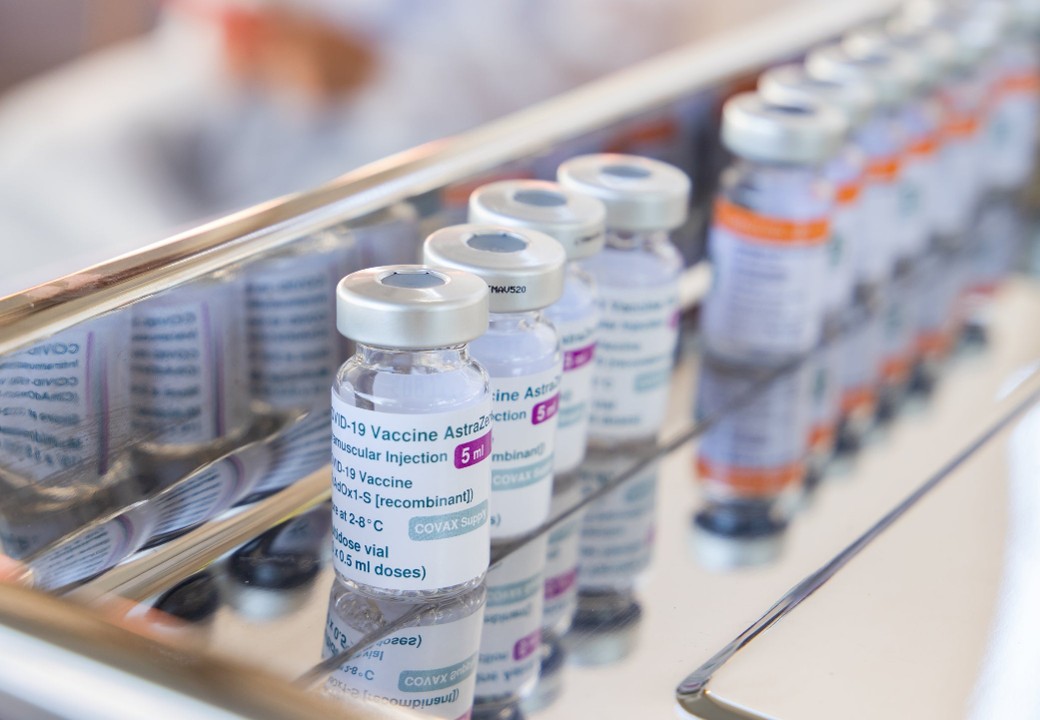
America’s war on mRNA is led by John F. Kennedy Jr., who has long been a vaccine skeptic. He continues to base his opposition on evidence from disproved studies. Despite the effectiveness of mRNA vaccines in keeping COVID-19 global outcomes from being worse, he describes the technology as ineffective or unproven. Despite being an anti-vaxxer, he and the board he heads and the Health and Human Services (HHS) he administers are continuing to fund non mRNA vaccine and non-vaccine options.
Kennedy cites 375 “studies” by anti-vaxxers to support his conclusions. His HHS board is populated with anti-vaxxers who appear to be particularly hostile to mRNA research. The result has been the cancellation of US$ 500 million in federal government funding for mRNA vaccine research. Yet, Kennedy’s Health and Human Services (HHS) is hailing other vaccine research programs, even with his and their anti-vaxxer rhetoric.
What Vaccine Programs HHS Currently Supports
The following lists current vaccine research being funded by HHS.
- Inactivated or attenuated whole-virus – This research focuses on vaccine development using chemically-killed viruses incapable of replicating but still present to signal an immune system response.
- Approved whole-virus vaccines to date include polio, rabies, encephalitis and yellow fever.
- Current research is targeting vaccines for
- Influenza A,
- H5N1 Avian flu,
- Coronaviruses, including COVID, SARS, and MERS,
- RSV,
- hMPV metapneumovirus associated with pneumonia, bronchitis, wheezing, acute asthma, croup and pulmonary fibrosis, COPD-related complications,
- RSV,
- Parainfluenza.
- Other research is looking at vaccine development to prevent Dengue fever, Zika, West Nile and Hepatitis A.
- Generation gold-standard universal platforms – This research is focused on using inactivated whole viruses to protect against respiratory viruses. The hoped-for outcome is an intranasally-administered vaccine that will block respiratory viruses at the body’s primary entry points. Vaccine-targeted development is focused on,
- Influenza A and Avian flu,
- Coronaviruses, including COVID, SARS and MERS,
- RSV,
- hMPV metapneumovirus,
- Parainfluenza.
- Synthetic multi-antigen platforms – This research uses re-engineered existing pox viruses to create a multiple viral antigen booster that targets diseases, with a focus on developing the following,
- A universal influenza vaccine,
- Vaccines for Coronaviruses, including COVID, SARS and MERS,
- A vaccine for HIV.
Comparing Current HHS Vaccine Programs With mRNA Research
The research programs HHS is funding are well-intentioned, but targeting and defunding mRNA as a villain is a big mistake. The biggest advantage that mRNA brings to fighting disease is speed. With COVID-19, mRNA vaccines have shown they are faster to develop, produce in volume and deploy. mRNA vaccines can be designed and manufactured in a few weeks.
The aforementioned whole virus, gold standard and synthetic antigen vaccines require months to culture and produce. In light of the immediacy of the COVID-19 pandemic, relying on the currently funded HHS vaccine research programs would have led to many more infections, hospitalizations, and deaths.
Downside Issues
Having said this, mRNA vaccines do have three downsides. These include:
- mRNA vaccines are very target-specific. That means for each new COVID-19 variant, the producers of mRNA vaccines needed a new version. It also meant that as the virus evolved, immunity to new variants wasn’t guaranteed. This has led to a constant need for new booster shots and may be contributing to overall vaccine fatigue in the general population.
- mRNA vaccines need very cold conditions, making transportability and storage a challenge, particularly in Developing World countries.
- mRNA vaccines, in rare instances, have caused inflammation of the heart muscle, a condition called myocarditis. This has impacted young men more than any other segment of the population. Although most experience the condition temporarily, it can cause long-term rhythm disturbances called arrhythmias. What researchers suspect is that in a small percentage of the population, mRNA vaccines trigger negative autoimmune responses similar to patients reacting to excessive radiation therapy, or to a bacterial, enterovirus and adenovirus infection that is drug resistant.
Upside Issues
An October 22, 2025, article in Nature describes an unforeseen upside. The vaccines given to fight COVID-19 have revved up immune systems to train them to kill cancers. Adam Grippin, a radiation oncologist at MD Anderson Cancer Center in Houston, stated, “The COVID-19 mRNA vaccine acts like a siren and activates the immune system throughout the entire body.” When asked to comment on the vaccine programming the body to kill lung cancer and melanoma, HHS had nothing to say.
Meanwhile, the Nature article reported a near doubling of survival times for those who had COVID-19 mRNA vaccines compared to the unvaccinated with cancer. The same results were not observed in cancer patients who had received non-mRNA vaccines.
What’s Lost Because of mRNA Defunding
Steven Lin, an oncologist at MD Anderson, in Nature describes the impact the decision by Kennedy’s HHS to defund mRNA research has had. He notes, “The current climate impacts patients because even the word mRNA has stigma these days. We’re walking on eggshells because there’s so much negative publicity about mRNA.”
mRNA defunding has impacted an mRNA cancer vaccine trial aimed at treating melanoma, pancreatic and other tumours. It has also impacted mRNA vaccine development aimed at treating Zika and rabies.
Bill Hanage, an epidemiologist at the Harvard T.H. Chan School of Public Health, in an article published on the school’s website on September 25, 2025, describes the HHS decision as “short-sighted, ignoring the short-term benefit the mRNA vaccines provide when meeting a medical threat like the COVID-19 pandemic. He states, “We should be acutely aware of the number of different infectious threats that can be thrown at us, and once you’ve got a really great new tool in your toolkit, why would you throw it away? Why would you turn your back on mRNA technology when it’s helped us so much?”
Hanage talks about the myocarditis risk, stating that “the risks of getting COVID are worse than the vaccine,” noting that it was hundreds of thousands of doses given before rare incidents of negative reactions to it were described. Hanage also points out that pulling the funding from mRNA vaccine research means that studying why the vaccines caused these rare reactions to occur will now go by the wayside and remain undiscovered. Hanage concludes, “There is no upside,” and that we will be “fighting any future pandemic with one hand tied behind our back.”

