Recently, I was reminded personally about the way statins can suddenly make your life extremely uncomfortable. If you are unfamiliar with this class of drugs, statins are used to lower cholesterol and, therefore, reduce the risk of heart and blood vessel disease. Statins work by targeting the liver enzymes responsible for making cholesterol, lowering bad LDL while raising good HDL cholesterol. Routine bloodwork tests for cholesterol levels in the blood, and since my early 40s, when my cholesterol levels started to creep up, I have been prescribed statins.
The first time didn’t go well. After a week, taking a daily 10 milligram dose of a statin, I started experiencing severe back pain and muscle soreness. I went back to the doctor who told me that in some people statins cause myopathy, back and muscle pain as well as weakness, cramps and other side effects. He switched me to another statin, which produced the same symptoms. The dose was reduced, but the pain lingered.
I started reading about statins and side effects. What I found out was that statins come in two categories: lipophilic and hydrophilic. Lipophilic (meaning fat-soluble) statins, like the ones that I had been put on, were more commonly associated with statin myopathy. This type of statin penetrates and diffuses through cell membranes faster than hydrophilic (meaning water-soluble) statins. The latter were better tolerated but penetrated cell membranes more slowly.
My doctor kept switching me between the two types of statins to find one that didn’t cause myopathy. Then, while visiting a pharmacy and mentioning my statin myopathy, the pharmacist suggested I try taking a statin with Co-Q10 to see if it mitigated the problem.
I had never heard of Co-Q10 or, as it is also known, ubiquinone. Co-Q10 is a naturally produced enzyme found in the cell membranes of the heart, liver and muscle tissue. Its role is to facilitate energy production and to be an antioxidant in cells. What could taking Co-Q10 do when taking statins? Research has shown that fat-soluble lipophilic statins interfere with Co-Q10, which is also fat-soluble.
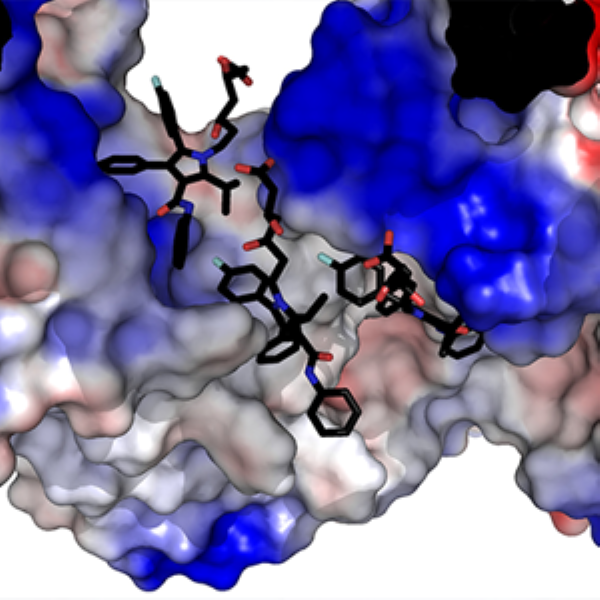
A recent Nature Communications article describes research from the University of British Columbia (UBC) with contributions from the University of Wisconsin-Madison. Using advanced imaging, the article concludes that three statin molecules are the culprits leading to statin myopathy. These molecules interact with a muscle protein that regulates calcium flux within cells. They bind to the ryanodine receptor (RyR1) protein, which causes it to lose control and keep a channel open for calcium to escape. It is the leaking calcium that is responsible for symptomatic pain, which can lead to significant muscle damage.
Specifically, the study looked at the statin I have been taking for more than twenty years. Atorvastatin is a lipophilic statin and one of the most commonly prescribed. When taking a 10 milligram dose daily along with 60 milligrams of Co-Q10, statin myopathy appeared to be controlled. When I couldn’t find 60 milligrams of Co-Q10, I took 100 milligrams daily. When I tried to go back to a 60-milligram dose, statin myopathy returned with a vengeance.
That’s when I stopped taking atorvastatin to see if the pain would ease, and it did after a week. I called my doctor for an appointment to review my blood cholesterol levels and determine if I needed to remain on a statin. He suggested a 5-milligram maintenance dose of a hydrophilic statin and cited studies that showed going off the drug would raise my risk for a heart attack or stroke at my current age by 5%. If staying on this new statin wasn’t going to cause myopathy, I was willing to try, and just for my own comfort, I decided to continue taking 60 milligrams of Co-Q10 daily. I’m now happy to report that after three weeks, the combination of the two has produced no recurrence of statin myopathy.
Statins rank third among the most prescribed drugs in North America, behind only antihypertensives and antidepressants. Lately, semaglutides like Ozempic, Wegovy and others have started giving statins a run for their money, but globally, 200 million are on them daily. So statins aren’t going away.
That’s why the research from UBC may prove very helpful. The lead author of that study, Dr. Filip Van Petegem, noted that “Statins have been a cornerstone of cardiovascular care for decades. Our goal is to make them even safer, so patients can benefit without fear of serious side effects.”
Today, while statin myopathy isn’t uncommon, severe muscle damage from statins does affect a small percentage of users. Creating a clear high-resolution picture of statin molecule interactions with RyR1 makes it possible to visibly make adjustments to the drug and eliminate the cause of myopathy.
Van Petegem notes, “It’s a big step forward because it gives us a roadmap for designing statins that don’t interact with muscle tissue.”

