
I have an eye condition called map-dot dystrophy. Map-dot is an inheritable condition that causes abnormal growth in the epithelial layers of the cornea, leaving lines and dot-like cysts that look like a roadmap when magnified. Unfortunately, I have passed this condition on to my daughter.
My wife has had her own eye challenges. She developed cataracts in her 40s: had one corrected with complications, and waited to have the second one done just recently. She also suffers from corneal erosion and has had one operation to remove an eroded layer of the epithelium from that eye.
Needless to say, with these personal eye experiences, I have had my eye on eye research for many years.
Recently, my eyes caught two stories about new treatment possibilities for conditions that affect almost 18 million globally. One is a disease of the cornea responsible for blindness in 2.1 million adults, and moderate-to-severe vision impairment in 5.5 million. The other is age-related macular degeneration (AMD), which leads to blindness for nearly 2 million globally and low vision for more than 6 million others.
3D Printing Used To Restore Cornea Is A World First

A North Carolina company, Precise Bio, is in the business of regenerative medicine. This recent branch of medicine uses stem cells, gene editing, biomaterials and bio-fabrication to repair, replace and regenerate diseased and damaged organs and tissue.
In a first, Precise Bio developed a 3D-printed cornea made from a patient’s own eye cells, cultured them in a laboratory, and then had them surgically transplanted into the eye to restore sight. Part of a Phase 1 clinical trial, involving 10 to 15 volunteer patients, this was the first operation performed using a manufactured cornea and was performed at the Rambam Medical Center in Haifa, Israel.
Manufacturing a cornea begins with using patient cells, which are then grown using Precise Bio’s bio-fabrication technology. Bio-fabrication can address almost any type of tissue using living cells from any major body organ, stem cells, bio-active molecules and other biomaterials. It can create nanoscale replacement tissue or full, precisely-shaped body parts.
In a November 19, 2025, press release, Aryeh Batt, Co-Founder and CEO of Precise Bio, states, “This achievement marks a turning point for regenerative ophthalmology, a moment of real hope for millions living with corneal blindness.”
Dr. Anthony Atala, Director of the Wake Forest Institute for Regenerative Medicine and a co-founder of Precise Bio, notes that this corneal replacement treatment “has the potential to offer a new, standardized solution to one of ophthalmology’s most urgent needs, reliable, safe, and effective corneal replacement.” He continues, “The ability to produce patient-ready tissue on demand could lead the way towards reshaping transplant medicine as we know it.”
Startup Creates Technology For AR Macular Degeneration
A two-piece technology named PRIMA, developed by California-based startup Science Corporation, uses a camera mounted to a pair of glasses, and a chip placed in the centre of the retina, along with wireless real-time connectivity to restore sight to those suffering from Age-Related Macular Degeneration (AMD).
AMD damages the central-vision photoreceptors contained within the eye’s retina. These are the photoreceptors we use to see what is directly in front of us, essential for driving, reading and recognizing people. As the photoreceptors die, our central vision becomes distorted and blurred while side vision remains. AMD is a condition that can start in our 40s. It is progressive and the leading cause of vision loss in the elderly. It can be dry or wet. The former is more common; the latter is more rapid and severe.
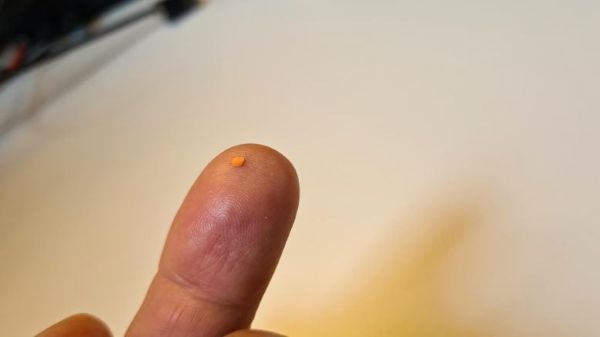
What PRIMA uses is a 2×2 millimetre photovoltaic microchip inserted subretinally to replace the lost photoreceptors and connect with the eye’s normal retinal circuitry, the optic nerve and our brains. The chip uses light as its power source, so there are no external wires or cables connected to a battery.
PRIMA users wear glasses with built-in tiny cameras to capture what is in front of them. The camera’s captured pixels are transmitted in real time, wirelessly, to the implanted microchip. The chip transmits the pixels to the brain to be processed as images. What the wearer sees after a short time are objects, words, and more in their central line of vision.
In a one-year trial with 32 patients, 27 could read while 26 demonstrated the ability to read at least two additional lines in the standard eye chart. The glasses can be adjusted for contrast and brightness with 12 times magnification built in. Currently, the images appear as black and white with no grayscale. New software will soon enable a full range of grayscale. Future chips are being designed to increase pixel density and add electronic zoom.
The trial results appeared in an article published on October 20, 2025, in The New England Journal of Medicine. PRIMA has been tested in a clinical trial at 17 hospitals in 5 European countries. Dr. Frank Holz, Chair of the Department of Ophthalmology, University Hospital of Bonn, in Germany, states, “For the first time we can restore functional central vision…The implant represents a paradigm shift in treating late-stage AMD.”

