2026 may be the breakthrough year for solid-state battery deployment for transportation applications. At this year’s Consumer Electronics Show, solid-state battery technology was on display, deemed production-ready. Solid-state batteries represent the new gold standard for electric vehicles (EVs). They provide higher energy density and lower weight than current lithium-ion battery packs. Until this year, solid-state was always seen as an on-the-horizon technology. Clearly, however, the past few weeks have overturned that notion with several stories describing the rapid pace of EV innovation. The implications for the automotive industry are enormous. Let’s begin.
Donut Lab Redefines EV Motors, Batteries And Bikes
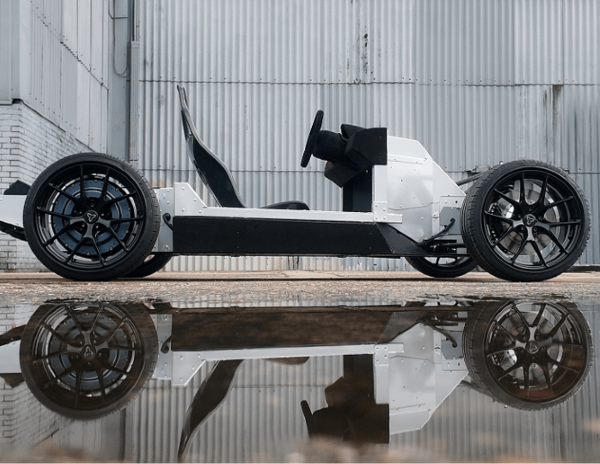
At this year’s CES, Donut Lab, an Estonian-Finnish company, revealed WattEV, a new solid-state battery platform with integrated in-wheel motors that is available to EV manufacturers.
The battery, states Donut, uses abundant materials, charges in five minutes, is cheaper than existing lithium-ion battery packs, can handle up to 100,000 discharge-recharge cycles, and retains 99% capacity in temperatures ranging from -30°C (-22°F) to 100°C (212°F) with no signs of degradation or ignition.
A motorcycle version is featured on the Verge TS Ultra, a futuristic bike with a driving range of up to 600 kilometres (over 370 miles), 200 Kilowatt charging speed and a 10-minute to 80% fast recharge.
The bike’s in-wheel motor is mounted in the rear and requires very few moving parts. Software upgrades get sent wirelessly to keep the bike state-of-the-art. For motorbike aficionados, the bike is described as a game-changer superbike. The sticker price reflects this at around USD $45,000.
Korean Researchers Double Battery Energy Density
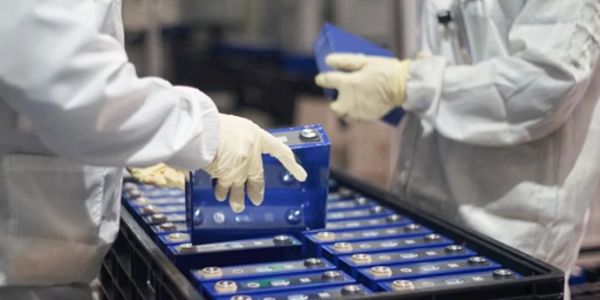
A South Korean team from POSTECH, KAIST, and Gyeongsang National University have developed an anode-free lithium-metal battery featured in the December 2025 journal Advanced Materials. The battery delivers nearly double the driving range using the same battery volume, 1,270 WattHours per litre versus 650 Wh/L found in typical lithium EV battery packs today.
Anode-free lithium metal batteries eliminate the need for a conventional cathode, reducing raw material requirements and allowing for more energy to be stored within the same volume. To ensure no dendrites form, a common risk in lithium-ion battery technology and something I recently experienced when my smartphone overheated and cracked through its casing, the battery uses distributed silver nanoparticles to ensure uniform lithium deposition. In testing, the battery retained 81.9% of its initial capacity after 100 cycles and 99.6% efficiency.
For commercially available solvent-based batteries, if adopted, this improvement could keep lithium-ion in the mix for EV platforms in competition with solid-state metal battery packs.
BYD Announces EV Battery Recharge In 5 To 9 Minutes
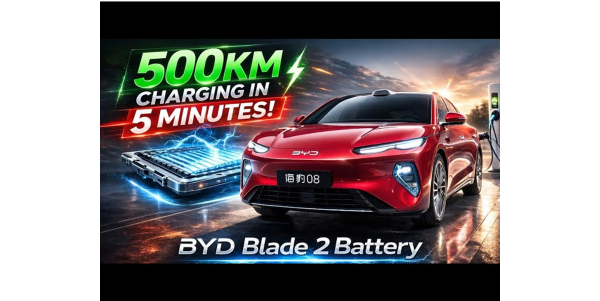
China’s BYD is the EV manufacturer that has supplanted Tesla as the industry leader. Recently, the company announced a 2nd-generation Blade 2.0 Battery with FlashPass high-speed charging.
FlashPass is a high-capacity 1.5 megawatt charging system that makes it possible to charge a battery from 10 to 70% in 5 minutes and to 97% in 9. Even in sub-zero temperatures, Blade 2.0 with FlashPass can go from 20 to 97% charged in 12 minutes.
This new FlashPass charger is almost 50% faster than previous BYD fast charging systems that the company is currently rolling out across China. By the end of this year, BYD will have installed more than 20,000 fast charging systems across the country.
The Blade 2.0 Battery will power BYD’s new Yangwang U7 luxury full-size sedan, giving it an optimal range (laboratory testing) of more than 1,000 kilometres (620 miles). More conservative testing suggests Blade 2.0 will manage approximately 70% of the distance per charge, which is no mean feat, making the internal combustion engine vehicle seem even more passé.
Blade 2.0 is a lithium-metal battery that uses iron phosphate. Iron phosphate is a cheaper material than cobalt or nickel used in other lithium-metal battery packs. It has, in the past, been considered a more range performance-limited lithium-metal battery than those using nickel and cobalt. So what has changed? It is the 1.5 megawatt FlashPass charger that has made iron-based batteries compete.

