One of the most hotly debated topics in the quantum computing industry is what the first breakthrough “killer application” will be, sometimes referred to as the “ChatGPT moment” for quantum.
When recently asked about the technology, IDTechEx Technology Analyst and quantum expert Noah El Alami made his picks for this emerging field, with quantum computing hardware sales expected to reach USD $21 billion in the next two decades. A recent IDTechEx report listed the industries where quantum computing can provide real solutions. The graphic in that report appears below.

Quantum computing use cases already exist for chemistry and material sciences, developing new pharmaceuticals and electric vehicle batteries. Vancouver-based D-Wave, an early quantum computing platform, has developed a growing ecosystem of quantum algorithm developers to support food, manufacturing, space, and telecommunications clients.
But where quantum computing talk presently centres is in cybersecurity. Why? Because quantum technology is seen as a game-changer, capable of breaking state-of-the-art encryption used today for internal digital security and on the Internet.
There are, however, other quantum technology headlines in the news that I thought were worth taking a look-see.
A Promising Breakthrough in Quantum Photonics
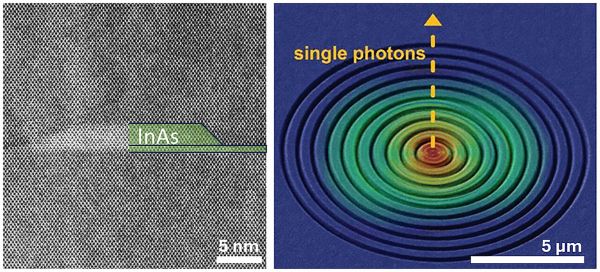
Ultra-fast photonic chips are about to kickstart quantum computing. At Julius Maximilian University and the University of Würzburg in Germany, researchers are inventing a photonic chip to control and direct quantum light beams used to carry data without degradation. Led by Andreas Pfenning and Sven Höfling, the chip generates photons where and when needed to allow for synchronous transmission.
The technology is critical in developing complex quantum circuits. The new chip can control light signals at high speed. It integrates home-grown crystals using thin-film molecular beam epitaxy fabrication with a barium titanate ferroelectric material to generate quantum light on a chip.
Applications include telecommunications and optical signal processing.
Quantum Technology Could Navigate Where GPS Can’t
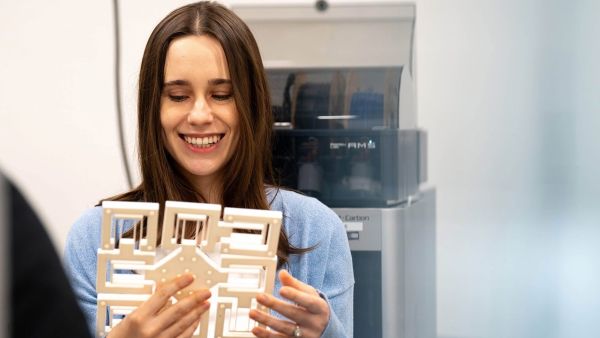
At the Institute for Quantum Computing at Canada’s University of Waterloo, a PhD student, Alex Maierean, who is also CEO of Phantom Photonics, a new startup, is developing quantum sensors to operate in extreme environments where GPS cannot go. This includes the insides of buildings, the deep ocean, caves, and outer space.
The technology uses quantum LiDAR-style sensors and single-photon detection for high-precision remote sensing and navigation. A tailored light pulse that gets sent and returns is captured, providing detailed timing and phase information to reconstruct location and distance.
This makes it possible to map GPS-inaccessible geography, enabling the building of high-resolution 3D maps for practical applications such as:
-
Submarine and underwater drone navigation without the requirement for resurfacing to acquire GPS coordinates.
- Indoor, mines, tunnels, tree canopies and high-rise dense urban environment navigation where RF and GPS signals are blocked.
-
Spacecraft navigation where satellite positioning, navigation and timing systems like GPS are intermittent or intentionally blocked.
Maierean is currently working on getting the device down to chip size.
Quantum Algorithms Advance Fusion Reactor Timelines
Quantum computing is being used to accelerate commercial fusion technology, specifically in creating plasma simulations to help develop next-generation reactor containment chambers.
In 2025, the Electric Power Research Institute (EPRI), an independent, non-profit energy research and development organization, announced the Fusion Quantum Challenge aimed at showcasing new ideas to advance commercial fusion energy technology.
Three winners were announced. First-place was awarded to a team from Missouri State University, led by Dr. Ridwan Sakidja, Professor of Physics, Astronomy and Material Sciences. They used quantum computing to focus on sparse approximations to reduce the complexity of data structures while retaining essential properties, as well as compression techniques to design new materials for use in commercial fusion reactors.
Other winners included an independent researcher, Justus Lau, for his submission focused on radiation-resistant materials. In the plasma category, Kory Burns from the University of Virginia was the winner, applying quantum-driven controls to stabilize plasma within fusion chambers.
Quantum Computing Contributors Win Turing Award
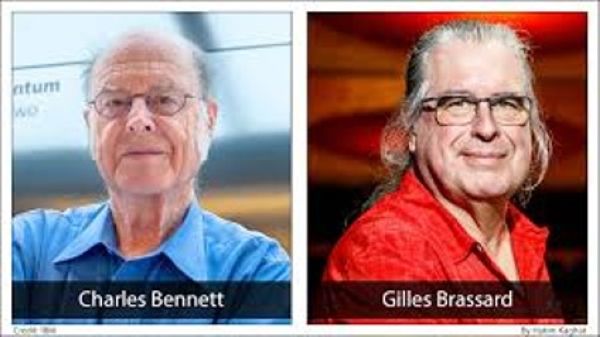
Gilles Brassard, a pioneer in quantum cryptography from the University of Montreal, and Charles H. Bennett, an IBM Fellow and American physicist, are co-recipients of this year’s Turing Award. Described as the Nobel Prize of computing, it is given to individuals who have advanced the theoretical and practical applications of the world of computing.
Brassard and Bennett were recognized for their foundational work in quantum information science, quantum teleportation and entanglement. In 1984, the two invented the BB84 protocol, enabling secure key exchanges across insecure channels. It remains in use to this day for fibre-optic, free-space and real-world quantum key distribution (QKD) networks.
The award, which comes with USD $1 million, marks the first Turing given for work in quantum computing, a good way to end this posting.

