There never seems to be enough energy in this modern world. Demand is fuelled by population growth, artificial intelligence (AI), and industrialization in the Global South. That’s why solar, wind, and conventional energy power generation demand continues to grow. We just can’t get enough electricity. At the same time, we face the fallout of our energy avarice, climate change. So, finding new clean energy sources is paramount.
Salinity Gradients To Generate Renewable Energy
The latest new way to generate energy, defined as blue, is osmotic, a renewable way to generate power from natural salinity gradients. Salinity gradients as a power source were previously described in an article on this blog site back in 2017. That research was being conducted at the University of Pennsylvania and described the power potential of salinity gradients to always produce a constant ratio measuring 24 x 7.
Others have expressed interest in the potential of osmotic energy technology, including the Laboratory for Nanoscale Biology at the École Polytechnique Fédérale de Lausanne (EPFL), in Lausanne, Switzerland.
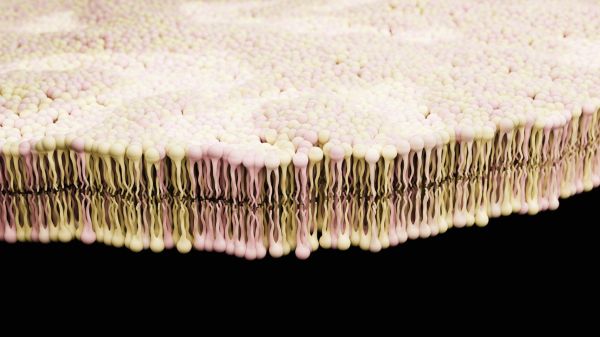
Led by Aleksandra Radenovic, EPFL researchers have developed an ion-selective membrane to harvest power from salinity gradients. The membrane contains tiny channels called nanopores, and uses lipid-coated microscopic bubbles that permeate through it to generate a consistent energy yield. The research was published in a recent paper in the journal Nature Energy.
States Radenovic, in a recent EFPL press release: “Our work brings together the strengths of two main approaches to osmotic energy harvesting: polymer membranes, which inspire our high-porosity architecture; and nanofluidic devices, which we use to define highly charged nanopores. By combining a scalable membrane layout with precisely engineered nanofluidic channels, we achieve highly efficient osmotic energy conversion and open a route toward nanofluidic-based blue-energy systems.”
From Laboratory To Commercial Viability
Of course, what gets done in a laboratory may not scale to commercial viability. The EPFL has two goals:
- Demonstrate lipid bilayer stability over a large area.
- Demonstrate durability in a real-world salinity/freshwater environment.
The challenge of riverine estuaries flowing into the sea is that they are not clean. All kinds of debris flow downstream to the sea. Filtering large particulate matter is easy, but fine particles and chemical contaminants represent challenges that could negatively impact membrane permeability performance. Ultimately, the EPFL team wants to produce a stable GigaWatt-scale salinity gradient power station coming from their research.
Japanese researchers, back in January 2024, published their work looking at the scalability challenges of nanopore osmotic energy. They looked at blue energy conversion potentials in artificial environments, describing scalability challenges, and noting:
“There is still a huge gap between the performances of a single-nanopore and a porous membrane, highlighting a crucial factor that considerably degrades the ability of the nanofluidic osmotic power generators.”
The EPFL research has currently produced a 1,000 lipid-coated nanopore membrane arranged in hexagonal patterns. The membrane was tested in a river water-seawater environment where the nanopore hexagons produced 15 watts per square metre, more than 2 to 3 times the power produced by previous polymer salinity gradient membrane technologies. This is a significant breakthrough with EPFL researcher, Yunfei Teng, stating, “The enhanced transport behaviour we observe, driven by hydration lubrication, is universal, and the same principle can be extended beyond blue-energy devices.”
Tzu-Heng Chen, at EPFL, also noted, “By showing how precise control over nanopore geometry and surface properties can fundamentally reshape ion transport, our study moves blue-energy research beyond performance testing and into a true design era.”
EPFL takes osmotic energy produced from saltwater/freshwater interfaces closer to commercial reality. We are much closer to seeing blue energy generator installations at the mouths of rivers meeting the ocean sooner rather than later. It represents an effective and cheap technology that could also be used for seawater desalination.

