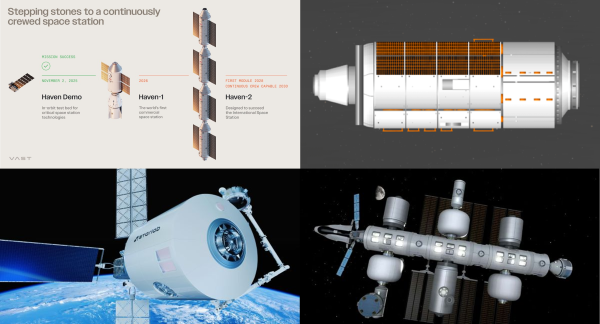
Kris Young is the COO of Vast, a private space company that proposes to replace the International Space Station (ISS). A former engineer at SpaceX, Kris was heavily involved in the development of the Crew Dragon spacecraft and helped with its human spaceflight missions. He has been a big supporter of the ISS and describes the station as a “first-generation” system.
He intends to replace it, first by launching Haven-1 in 2026, the world’s first commercial space station, and follow that with Haven-2, a multiple-module system that has endless possibilities in terms of growth and upgrades. Being the first with Haven-1, well ahead of a number of big-name space competitors, will be a significant accomplishment for this space company startup.
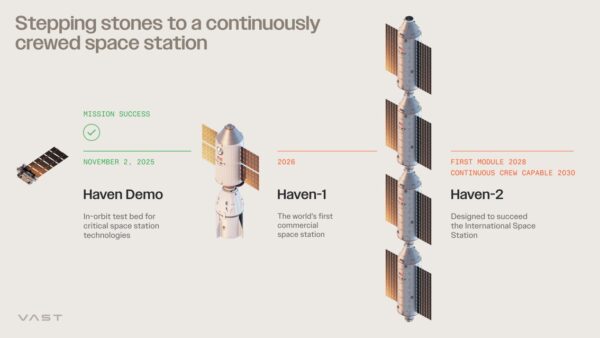
Haven-1 will enable human crews to visit and stay for several weeks. VAST is staging its space station development first with a system designed for short and eventually longer stays. Young explains, “On Haven-1, we are learning how to design, build, and operate to human spaceflight safety standards, conduct long-duration spaceflight across its multi-year life span, and prove out and evolve our novel crew habitation systems.”
He provides a specific example describing Haven-1’s environmental control and life support system (ECLSS), which uses a simple open-loop architecture that can support short-duration crew visits while continuing to experiment with closed-loop life support systems to rapidly perfect the technology for Haven-2.
Young notes, “We’ve learned from NASA that closed-loop ECLSS systems are hard. That is why, through our strategy, we will be on a 5th-generation system by the time we fly Haven-2 in support of continuous human presence.”
As Haven-2 gets built, VAST will incorporate the lessons learned from the existing modules in space, adding new features and upgrades. Young describes their journey at VAST as an iterative process that will see a state-of-the-art commercial space station featuring onboard gravity by 2035.
How does the progress VAST is making compare with other commercial space station ventures?
Only one commercial space station candidate is currently vying with VAST to be first to space, but its plans involve ISS integration as a precursor to independent operation. That company is Axiom Space, founded in 2016 and selected by NASA in 2020 to deliver a commercial habitat module to the ISS.
Axiom’s NASA and SpaceX partnerships have led to private missions to the ISS as well as independent flights on Crew Dragon spacecraft. Axiom is also the contractor for new spacesuits for NASA, designed for lunar surface missions under the Artemis Program.
Axiom’s commercial space station has seen its plans undergo changes since the original contract it signed with NASA. Instead of a habitable module delivery, Axiom intends to launch the PPTM (Payload Power Thermal Module) as the first component of what could become a replacement for the ISS after 2030. The PPTM was built in Italy, and it is being tested and completed at Axiom’s Houston, Texas, facilities. The current plan is to launch PPTM with rendezvous and docking with ISS sometime in early 2027, where it will remain for approximately nine months. The next stage will be the first habitat module deployment in early 2028. PPTM will undock from the ISS and link up with the Axiom habitat. Additional habitat module launches will follow.
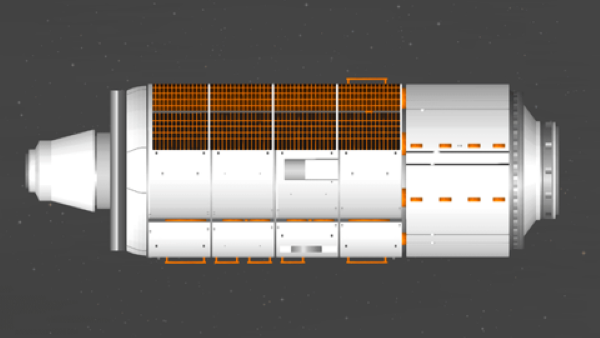
Starlab is another VAST contender for bragging rights to be the first commercial space station. Starlab is a partnership that first involved Lockheed Martin as a partner with Nanoracks and Voyager Space, two NASA-contracted commercial space companies. Airbus has recently replaced Lockheed Martin with the timelines for Starlab’s operational start now set for sometime in 2028, dependent on SpaceX’s Starship meeting its milestones as a launch vehicle. Like VAST’s Haven-1, Starlab will not need to rely on the ISS for its deployment.
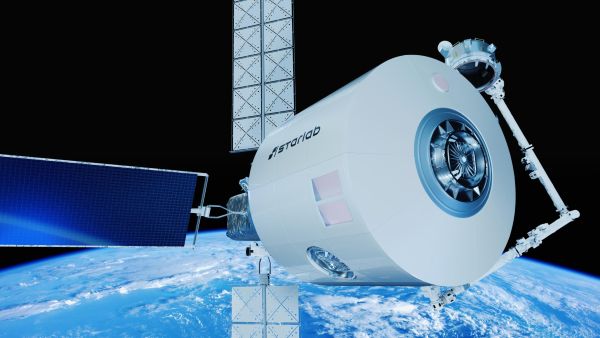
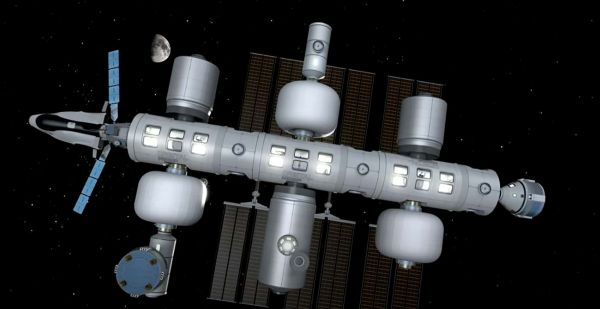
The last contender is Orbital Reef, a project involving a consortium that includes Blue Origin, Sierra Space, Boeing, Redwire Space, Genesis Engineering Solutions, Amazon and Arizona State University. Orbital Reef’s deployment has been dependent on getting Blue Origin’s New Glenn rocket to fly. It achieved a major milestone this month with the launch of two spacecraft destined for Mars and a flawless touchdown for its reusable first stage. The coordination of all the players in this consortium and the modular nature of the station’s development and deployment have delayed the project, with full station operations not expected until the early 2030s.
So, there you have it. Note that China’s Tiangong or a future Russian-Chinese station or not part of this article because we chose only to describe ISS commercial space station alternatives. We can look at what the Chinese and Russians are prepared to reveal in a future posting.

