
Two years ago, I wrote a posting that included an Elon Musk prediction for humanoid robots. Musk said a billion humanoid robot units would be deployed by the 2040s, and 100 billion by 2060. Musk is ever the optimist about advancing technology, but in this case, was he just shooting the breeze?
If Musk’s predictions were to come true, what would it mean for the future of the kind of work humanoid robots could do, replacing humans? What would be the downstream impact on income? What would happen to revenue streams from income that governments counted on?
Humanoid Robot Speculations and Reality
Musk sees a big future for humanoid robots. If so, however, the humanoid robot revolution is off to a slow start. In his own Tesla factories today, there are no humanoid robots replacing workers on the assembly line.
Musk’s robot is Optimus. When finally deployed for real, and not just the subject of clever online videos, Musk states the price will be between US$ 20,000 and $30,000. Musk describes a not-yet-built Gen 3 version priced at $18,000. That’s cheap when compared to working models currently in the market, a list that includes:
- Figure AI. Figure 02 is the company’s latest robot model, which recently completed a 10-month trial at a BMW Spartanburg, South Carolina, assembly plant. Figure 02 costs $130,000. BMW hasn’t disclosed how many robots participated in the trial. BMW released statistics showing that Figure 02 was deployed for 1,250 hours and accumulated 1.2 million steps. Currently, there are no robots in use at Spartanburg, which may say something about the trial results.
- Humanoid (HMND). This UK company has two humanoid robots: Alpha Bipedal and Alpha Wheeled. One has legs, and the other sits on wheels. The latter has been undergoing a trial with Siemens in Erlangen, Germany. The work is focused on tote-to-conveyor-destacking with the robot picking, stocking and conveying items for delivery to human operators. Both Alpha models are priced at $100,000. It is unclear if Siemens will commit to more than the single unit the company has currently deployed.
- Apptronik. The name of the robot is Apollo. Mercedes-Benz is currently testing it in a pilot project. Austin, Texas-based Apptronik was spun out of the University of Texas. At Mercedes, Apollo is doing physically demanding and potentially hazardous logistical tasks. The robot is designed to work in conjunction with humans. It learns the job by observing human coworkers and can be fully integrated into brownfield deployments, capable of doing a variety of tasks in an unmodified setting. Target pricing per unit is under $50,000.
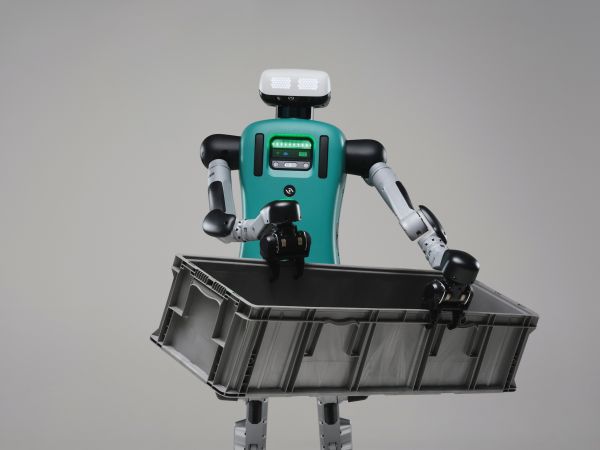
- Agility. This Salem, Oregon-based company has created Digit. Amazon is deploying Digit in live warehouse operations after 18 months of testing, where the robot achieved a 98% task success rating with operational costs of only $10 to $12 per hour, well below the $30 Amazon has been paying human workers. Amazon is ordering 10,000 units annually for live warehouse operations. Tasks include picking, moving and recycling of inventory, working in collaboration with human coworkers in unmodified settings. Of all the robots previously mentioned, Digit is the most expensive, coming in at $250,000 per unit. Even at that price, however, Amazon expects each Digit unit to pay for itself in two years.
The Human Implications
If the future reality is reflected in the Amazon experience, then blue-collar factory workers are in for a rough time. Equally, if there is widespread use of artificial intelligence (AI), white-collar office workers will equally be in for rough times.
Blue-Collar Challenges
Only a fraction of the present human workforce will remain after humanoid robots like Digit and Apollo are widely adopted. Will new opportunities emerge for these types of workers? When you read about future job forecasts, the occupation most often mentioned is robot maintenance and repair. If the numbers Musk describes become reality, there should be lots of work to go around. Likely, it will not replace all the lost jobs. The path to self-employed skilled work should help pick up some of the workforce, so think plumbers, electricians, and the construction trades.
White-Collar Challenges
With the AI Claude already capable of writing software code even for programming languages like PL/1, Cobol and Fortran, the old languages of mainframes, white-collar human programmers will become dinosaurs. AI will do the jobs of law clerks, accountants, mid-level managers in business and finance, and more. Will AI replace teachers with humanoid robots at the head of classrooms? What is likely to happen to white-collar workers is a cascade into blue-collar work opportunities. What could equally happen is an explosion in careers in the creative arts.
Tax Revenue Challenges
In December 2025, Howard Gleckman wrote an article in Forbes describing how the mass deployment of AI would wreck the American federal taxation system. He pointed to tax revenue numbers that show between 65% and 83% come from wages and salaries, and that payroll taxes support healthcare and other social programs. He was only writing about AI and not the impact of humanoid robots.
The implications for tax streams from implementing AI and robots across a nation’s economy are dire. Shrinking employment means a collapse of the tax revenue stream that represents the majority of money the government collects each year to run its programs.
In Part 3, we will look at more of the implications for the future of work, society, and how governments can remain viable in response.