
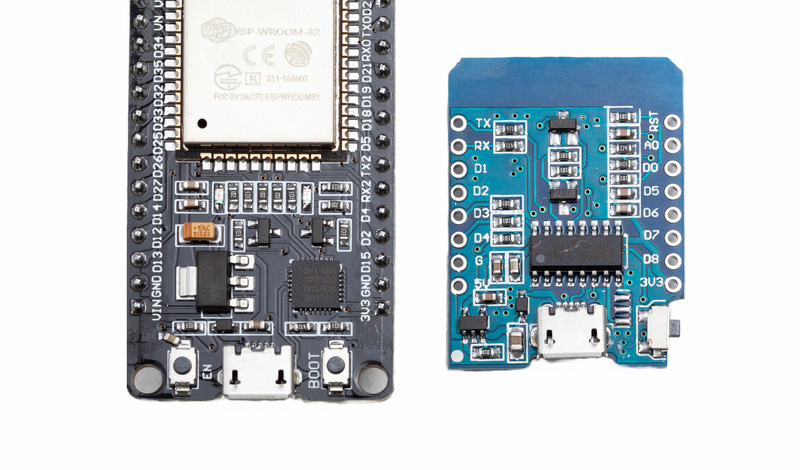
Last week, Harper Lane, becoming a regular contributor to the 21st Century Tech Blog, wrote Part 1 of a 2-part series describing how embedded controllers (ECs) are essential to modern digital devices. In Part 2, she continues her look at these important components and how artificial intelligence (AI) will alter their operation in helping to manage our digital world.
AI is no longer confined to cloud platforms or high–powered servers. Increasingly, it is found in embedded systems, the small, purpose–built computers found in machines, devices, and the infrastructure that surrounds us in the 21st century.
Part 1 explored the hidden complexity of custom embedded controllers. Part 2 builds on that foundation by examining what happens when AI enters the picture, and how and why its role is fundamentally different from traditional control logic.
Rather than replacing deterministic embedded systems, AI is reshaping what these systems notice and predict, and how they adapt. This new class of hybrid designs combines strict real–time guarantees with data–driven intelligence, opening the door to smarter, more resilient machines.
Why AI Fits Embedded Systems and Where It Doesn’t
ECs are deterministic by design. Given the same inputs, they produce the same outputs within set parameters. That predictability is non–negotiable for motor drives, brakes, infusion pumps, robotic arms and similar mission-critical systems.
AI, however, acts in a fundamentally different way. AI ECs are probabilistic. They infer patterns, make predictions, and sometimes take different execution paths even when inputs are similar. That variability is a strength for perception, but a liability for real–time control.
So modern ECs don’t let AI drive. Instead, AI observes.
AI added to ECs identifies trends, flags anomalies, and predicts what may happen next. The information the AI component of the EC gleans is handed off to the deterministic component of the device to decide exactly when and how the system should respond.
Here’s an example. In elevator EC, the embedded AI might notice subtle changes in motor current, suggesting increasing friction, helping to inform when parts need to be replaced or gears require lubrication. The deterministic components of the EC still decide when to open the doors, when to engage the motor, and when to brake. The deterministic EC component keeps to its fixed schedule every time.
From Raw Sensor Data to Meaningful Insight
Embedded systems live at the edge of the physical world, surrounded by noisy, imperfect signals. Accelerometers vibrate. Temperature sensors drift. Voltage fluctuates. Traditional threshold–based logic can only go so far.
This is where AI’s probabilistic capability shines. Machine–learning models running locally can learn what normal looks like. More importantly, ECs with AI can learn when something starts to look almost wrong.
In industrial equipment, vibration sensors paired with embedded AI can detect bearing wear days or weeks before a fault triggers an alarm. In medical devices, AI can identify subtle signal degradation that might otherwise be dismissed as noise. In HVAC systems, it can distinguish between normal seasonal variation and early component failure.
The EC with AU attributes isn’t changing its behaviour dramatically. It has just become better informed.
Predictive Maintenance Moves Into the Machine
Predictive maintenance isn’t new, but AI makes it work far better. Instead of servicing equipment on fixed intervals or reacting after failures occur, AI ECs continuously assess their own condition.
A pump controller might correlate runtime hours, temperature cycles, and pressure fluctuations to estimate remaining component life. A railway subsystem might track vibration signatures across thousands of braking events to spot early fatigue. A factory robot might notice increased torque requirements during repetitive motions and flag a mechanical issue before accuracy suffers.
These insights can be fed to monitoring platforms or industrial automation software solutions. The intelligence derives from the grass roots, the EC itself, right where data is generated and timing matters most.
Hardware Designed for Hybrid Intelligence
As AI becomes more common in ECs, hardware design is adapting. Instead of forcing learning–based workloads onto the same processor that handles time–critical control, modern systems increasingly include dedicated processing blocks optimized for inference.
These components are built to handle matrix math efficiently while consuming minimal power. More importantly, they operate alongside real–time cores rather than interfering with them. That separation ensures AI workloads, whose execution time can vary, never disrupt deterministic control loops.
You can see this architecture emerging in everything from industrial controllers to advanced driver–assistance systems. The embedded AI processes camera feeds or sensor streams, while the real–time processors continue to manage the steering, braking, or actuation on strict schedules.
AI in Industrial Systems You Don’t Normally Think About
Not all AI–enabled ECs are flashy. Some of the most interesting applications are deeply practical.
Take manufacturing waste management, for example. ECs already coordinate conveyors, compactors, and sorting mechanisms in real time. Adding AI allows these systems to identify abnormal material composition, detect early mechanical strain, or adapt sorting behaviour based on changing inputs, all without slowing down the line. Timing still rules. AI just helps the system react smarter within those constraints.
The same pattern shows up in packaging equipment, food processing lines, and materials handling systems. AI augments awareness; embedded controllers preserve precision.
Safety–Critical Systems and the “Advisory” Role of AI
In regulated or safety–critical environments, AI’s role is intentionally limited. Systems like transportation controls, energy infrastructure, and medical devices demand behaviour that can be validated, tested, and certified.
Here, AI typically operates as an advisor. It may detect road surface changes or sensor degradation within a vehicle subsystem, while the EC still enforces braking and stability rules exactly as designed. The added intelligence enhances awareness without compromising guarantees.
Power Budgets Still Matter… Maybe More Than Ever
ECs don’t get fed unlimited energy. With added AI, that doesn’t change. Running complex models continuously would quickly blow power budgets, especially in battery–powered or thermally constrained devices. That’s why AI ECs tend to be lightweight and event–driven. Models are optimized, reduced in size, and activated only when conditions warrant it. A sensor spike triggers inference. A pattern deviation wakes the model. The rest of the time, the system sleeps.
More importantly, not every EC needs integrated AI. The goal here isn’t constant intelligence, but rather strategic. That means enough insight to matter, without sacrificing efficiency or longevity.
Where This is Heading
The real impact of AI ECs isn’t to create device autonomy. It’s about device resilience with traditional ECs as the backbone and embedded AI as the nervous system layered on top.
As EC technology continues to evolve, expect the line between control and intelligence to become more refined. Future systems will deepen this hybrid approach, pairing strict timing guarantees with increasingly sophisticated perception.
For engineers, the takeaway is reassuring. The fundamentals still matter. Deterministic timing, power budgets, and reliability don’t go away when AI shows up. If anything, they will become even more important.