The age of the internal combustion engine, the dominant means by which road-based vehicles have been powered, is increasingly being challenged by advancements in batteries. Electric vehicle (EV) developers are addressing range anxiety. A growing used EV market is making once pricey models far more affordable. Charging infrastructure through public, service stations, and curbside sites is on the rise.
In the latest news, Dutch students have developed detachable modular batteries to go with their new city EV. IDTechEx reports on the rapid progress in the development of solid-state batteries (SSBs), and a British university reinvents the silicon electrode.
Dutch Students Invent EV with Detachable Batteries
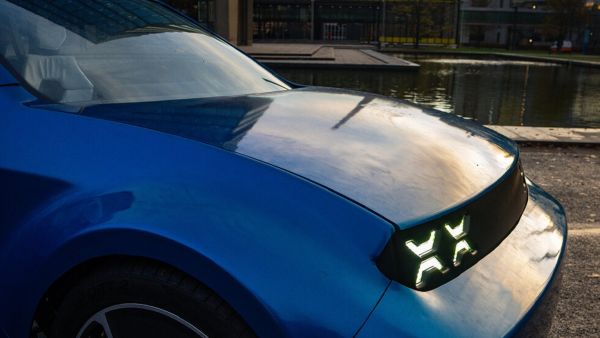
(Photo Credit: Sarp Gürel/Interesting Engineering)
Leave it to students to come up with an EV called ARIA, a modular city car with standardized parts, and a readable user manual that is less than encyclopedic and designed for home repair aficionados. The students hail from Eindhoven and Fontys Universities, and Summa College in the Netherlands.
ARIA design features include interchangeable modules rather than black box components found in brand EVs. Instead of a single large integrated and often inaccessible battery pack, ARIA uses six 12-kilogram (26-pound) easily removed battery modules that can be replaced by hand. Each body panel and the interior electronics are easily removed, repaired or replaced. ARIA comes with its own toolbox and an app for diagnostics, and information for doing maintenance and step-by-step home repair.
ARIA was built to meet the aspirations of the European Union when it passed the 2024 right to repair legislation for consumer electronics to make post-warranty maintenance easier and cheaper, including applying these regulations to EVs.
The Current and Future State of Solid State Batteries
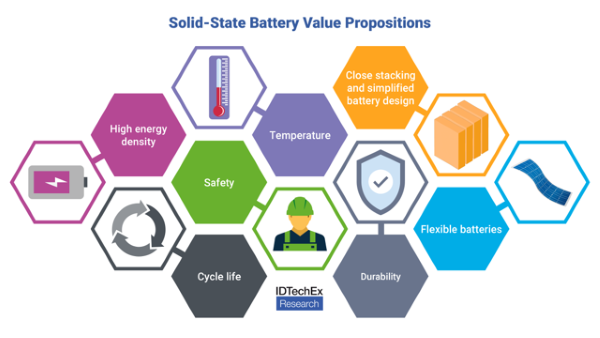
The developments happening in SSBs, states Dr. Xiaoxi He, an energy storage expert from IDTechEx, are rapidly transforming the future of battery technology, providing breakthroughs in energy density and safety. IDTechEx’s latest report, Solid-State Batteries 2026-2036: Technology, Forecasts, Players, projects that SSB sales are expected to grow to US$10 billion by 2035.
Leadership in SSB technology appears to be coming from non-North American vehicle manufacturers. This year, Mercedes‑Benz EQS introduced an EV with a lithium‑metal battery capable of travelling over 1,200 kilometres on a single charge. Volkswagen has showcased an SSB for a Ducati motorcycle, while BMW recently began road-testing a sulphide SSB for its i7 model.
Polymer-based SSBs are already in use by Blue Solutions’ Bluebuses in Europe, Bluecar car‑sharing fleets, and Daimler’s eCitaro models.
Keeping pace are Asian producers, including Panasonic, Nissan and Yokohama in Japan and Chinese manufacturers who have introduced NIO’s 150‑kWh semi‑solid pack, and SAIC’s MG4 batteries for commercial EV models. Another semi-solid battery is being used by Forland for a new truck model. The development of semi‑solid batteries is seen as a safer battery than the current leading Li-ion liquid technology. Meanwhile, Chinese manufacturers are working to develop ceramic‑based all‑solid‑state batteries (ASSBs).
Why the interest in SSBs? This battery technology is a logical replacement for inflammable organic liquid electrolytes used today in Li-ion technology. Solid-state electrolytes (SSE) can be paired with silicon and lithium metal anodes and high-voltage cathodes to produce higher energy density. Unlike liquid Li-ion battery packs, SSBs can be designed with smaller form factors and then linked together to create flexible pack designs for different types of vehicles and applications.
Beyond EV applications, the market for SSBs can expand to large-scale applications such as grid energy storage, or smaller deployment in medical equipment, including wearables, drones, electric aviation and eVTOLs, and in robots.
New Silicon Electrode Could Revolutionize Batteries
Research at Queen Mary University in London, UK, has produced a double-layer silicon-based composite electrode that provides fast-charging for EVs at lower costs by between 20 and 30%. The research was recently published in the journal Nature Nanotechnology. Silicon electrodes have ten times higher theoretical capacity and faster charging speeds than current commercial electrodes. The problem with silicon in the past was fewer charge/discharge cycles and rapid degradation.
This new design has the potential to be commercialized as a double-layer graphite-silicon composite electrode exhibiting lower polarization and capacity decay when compared with what is currently available today.
For the latest in battery and other 21st-century technology and scientific breakthroughs, please consider regular visits or subscribing to this blog site.

