
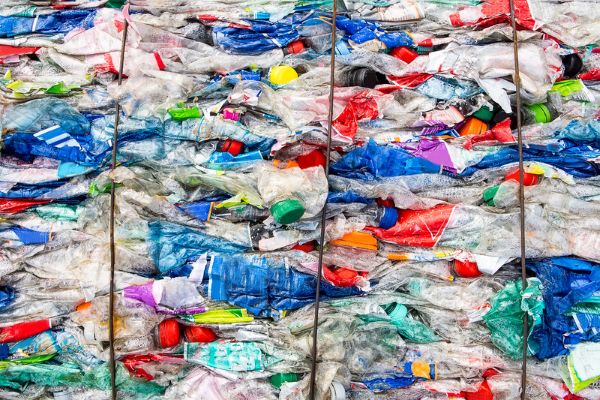
The United Nations estimates annual production of new plastic at 430 million tons, with global projections to triple by 2060. Most of the plastic produced is used once and then discarded, ending up in landfills or in the environment. Less than 10% of plastic gets recycled, while 12% is incinerated. The report calls this form of consumption a linear take-make-waste model.
Plastic production in 2019 produced as much greenhouse gas (GHG) emissions as 189 coal-fired power plants. Plastic in the environment is damaging habitats on land and in rivers, lakes and oceans. It is in the air we breathe and the water we drink. We can measure nanoplastic particles in our blood, in organs, and even in our brains.
The ocean is the largest natural carbon sink on the planet. That’s why an article appearing in Oceanographic Magazine that describes research on microplastics disrupting the ocean’s ability to absorb carbon dioxide (CO2) is greatly concerning.
Microplastics can be found embedded in soil and mixed with sand on beaches. As plastic waste breaks down in the environment, it is even creating a new classification of rocks called plastiglomerates. The Geological Society of America, in a 2014 article, described plastiglomerates as “an anthropogenic marker” that defines the Anthropocene, a new geological age distinctively influenced by our presence.
98% of Plastic is Produced from Oil
Fossil fuel industry leaders recognize the importance of plastic demand in framing their vision of the future. Even if we stop burning oil for energy, demand for plastic will support the industry’s growth, representing a third of output today and 50% by 2050.
Industry lobbyists have helped to stymie efforts to draft and pass a binding UN treaty to address plastic in packaging and its management as waste. Inger Andersen, Executive Director of the UN Environment Program, has stated that a global treaty is needed to deal with a plastic crisis that “is getting out of hand, and people are frankly outraged.”
So, what to do?
Novel Solutions for Managing Our Plastic Crisis
What if we could find ways to destroy plastic without negatively impacting the environment? Better yet, what if we could turn plastic into a new material? Or, what if we could create a material to replace plastic without any of its environmental consequences?
Korean Researchers Develop Plastic Waste Destroyer
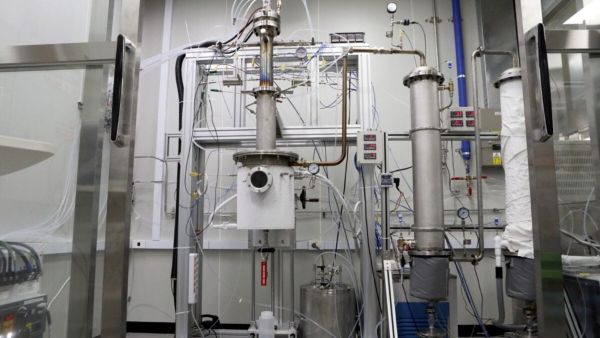
A hydrogen plasma torch has been invented by researchers at the Korea Institute of Machinery and Materials that can break down unsorted plastic waste, turning it into usable chemicals. The torch’s temperature reaches 1982°C (3600°F). It eliminates the need to sort plastics, a key challenge for recycling programs.
The highly energized 100% hydrogen plasma decomposes mixed plastics in less than 0.01 seconds. It replaces pyrolysis, the current standard for heating plastics to break them down. Rapid decomposition breaks down the plastic polymers without creating carbon soot. The byproducts are 99% pure ethylene and benzene, which can be used to make new plastic.
If we can endlessly recycle unsorted plastic waste, it means we don’t need fossil fuel companies producing more of it. Instead, this invention can help us bring plastic into a sustainable circular economic model.
Plastic-Derived New Material to Boost Batteries
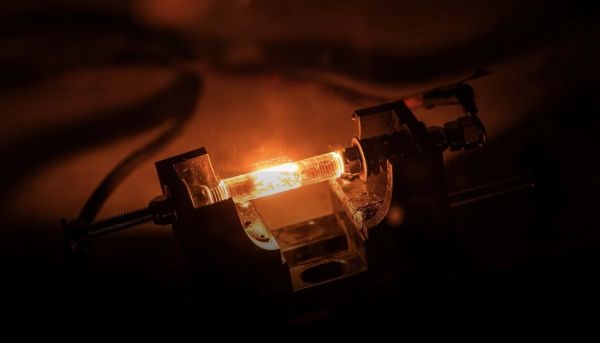
Shenyang Agricultural University have published research results in the journal Sustainable Carbon Materials that describe a method of converting plastic waste into essential battery parts. The technology employed is called flash Joule heating. It is an electrothermal ultrafast method for heating plastic to thousands of degrees in milliseconds and then cooling it just as rapidly to yield usable materials for batteries, serving as electrodes and supercapacitors.
Professor Yan Chen, from the South China University, states: “Transforming waste plastics into functional carbon materials could help close the loop between pollution control and renewable energy…This is a promising pathway toward a circular carbon economy.”
Biological Biodegradable Plastic Alternative
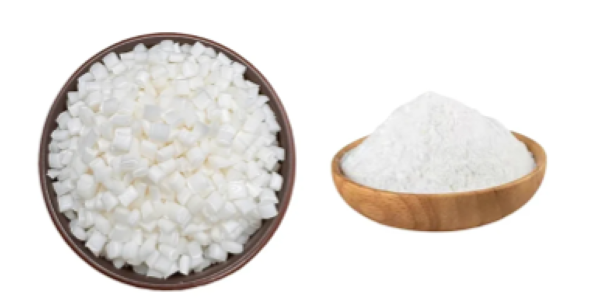
Researchers at Toronto Metropolitan University have developed a biodegradable single-use plastic alternative produced by bacteria fed on sugars, fats and organic waste. Instead of oil-based plastic, this bacteria-created alternative is non-polluting and compostable.
Seen above, the plastic alternative is mcl-PHAs, or medium-chain-length polyhydroxyalkanoates. It is eco-friendly and can be used to make films, bottles and other packaging. Described in an article appearing in the journal Molecules, mcl-PHA is fast-growing. Output can be shaped and moulded by conventional equipment used to produce conventional plastic products.