Singularity means distinctive, unique, individual and alone. The word is used to describe the point of no return at the centre of a Black Hole where space, time and gravity become infinite. Other uses apply to artificial intelligence (AI) and a point in time when machines and humans merge, a prediction made some years ago by Ray Kurzweil.
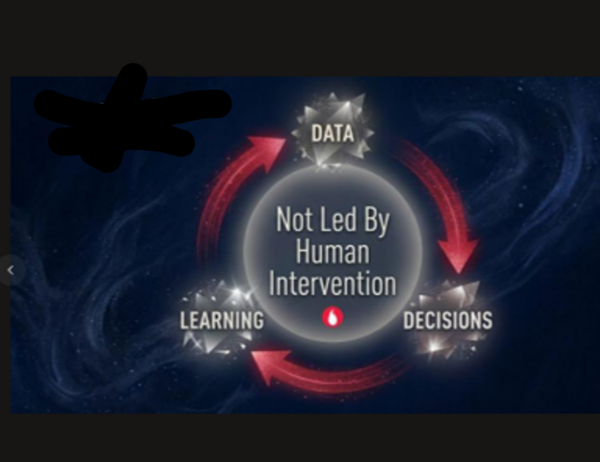
Now, the term is being applied to business as AI transforms how it is done. The term is “Organizational Singularity,” which is the theme of the latest Metatrends newsletter from Peter Diamandis, co-founder of Singularity University and the XPrize.
Peter sees the emergence of AI in business as both disruptive and revolutionary. Humanity has faced multiple revolutions from our emergence as hunter-gatherer, erect-walking intelligent primates, to where we are today. Here is a list:
- First Revolution: Stone tools made from knapping flint, turning nodules into axes, spear points and arrowheads, and making humans the ultimate predator.
- Second Revolution: We call it the Neolithic, when humans domesticated plants and animals, built permanent cities, moved from stone tools to bronze and iron, developed writing and record-keeping, and the emergence of empires.
- Third Revolution: This was the Financial Revolution that coincided with the European Renaissance. This revolution included advances in banking, capital accumulation, the invention of movable type and printing of books, with the widespread distribution of knowledge accompanying the founding of modern capitalism.
- Fourth Revolution: We call it the Industrial Revolution. It upended national economies and the methods of doing business in Europe and elsewhere in the 19th century, taking 50 years to transform the continent’s largely agrarian-based economy into one dominated by machines and mass production.
- Fifth Revolution: We call it the Computer Age, followed by the inventions of the Internet and the World Wide Web. This revolution upended how humans work, communicate and how the global economy operates.
- Sixth Revolution: This is the revolution of AI and the coming of the Organizational Singularity, transforming society, business and what humans will do in the next decade and beyond.
Organizational Singularity
Characterizing the organizational singularity. Peter calls it “the inversion nobody predicted.” What does he mean?
The Organizational Singularity changes businesses, working from the top down. This challenges our ideas of how automation impacts business.
Why?
Organizational Singularity will pose a greater challenge to white-collar rather than blue-collar employees. The latter group will be threatened more by automation and AI-enhanced humanoid robots.
AI’s ability to replace white-collar jobs in middle management represents the dehumanizing threat. The work of 20 will conceivably now be done by one. In this scenario, middle managers are most at risk, replaced by AI agents, each subscribed to for $20 per month.
AI agents will speak and understand multiple languages, and manage scheduling, production, logistics, delivery, invoicing, and customer service.
Paint this picture: A single human employee will supervise 20 AI agents, all capable of outcompeting former human employees, and doing it at a fraction of the cost.
We are talking about shrinking payroll by a factor of 50, from $20,000 monthly, to $20 times 20, or $400.
Business owners and senior managers salivate at the prospect of cost savings that will accompany the organizational singularity.
Implications for Future Business
Our traditional view of big corporations in the 21st century includes glass towers, central and branch offices, all places where thousands to tens of thousands gather and work. That is, until COVID-19, which changed the paradigm. Suddenly, those glass towers were empty, and employees began working remotely, usually from home.
Today, business and government, in the post-pandemic world, are trying to herd remote workers back into those glass towers. But wait, what if AI agents replace much of the workforce? With AI agents, even the glass tower is no longer needed. With the onset of the Organizational Singularity, the few remaining humans in senior roles only need slimmed-down facilities, while AI agents do much of the work. The few remaining humans on the payroll will still hold meetings with the space needs of corporations devoted to computing resources populated by AI agents.
The Organizational Singularity will extend beyond the glass tower, impacting factories, warehouses and distribution. The combination of humanoid robots infused with AI plus AI agents will manage every aspect of production. AI-informed autonomous robots will operate warehouses and do the picking and packing. AI-informed self-driving autonomous trucks and drones will handle supply chain responsibilities.
The human workforce in factories and warehouses will shrink as AI agents supervise and coordinate production and distribution. Humanoid robots will work side-by-side with this diminished workforce. Fewer humans will occupy higher-value jobs focused on quality and the maintenance of equipment and robotic companions.
Digital Twins and the Organizational Singularity
AI agents will work with real-time virtual replicas of the business. These replicas are called digital twins. For AI agents, the digital realm is their home. There, they can test new scenarios and implement operational changes before replicating them in the physical world. Through digital twin interactions, AI agents will redefine how corporations operate, accelerate the learning curve, increase innovation, implement new operations, improve timelines and build new products.
If I were a senior manager in a business that adopts AI agents and digital twins, I’d be looking over my shoulder, because other than a boss, there’s no need to apply for a job, because no humans will be needed.
The Surplus We Have Will Be Human
What are the short and long-term implications of the arrival of the organizational singularity?
A surplus of displaced humans, representing as much as 75 to 80% of the workforce, will pose a significant social problem for governments. Hopefully, this is a short-term problem that companies and governments can address through unemployment insurance, retraining, upskilling, universal basic income (UBI), and new startup funding programs.
If mature businesses can dehumanize their workforces and still succeed, what will stop some with good business concepts who lost their jobs from starting new minimalist companies built from the beginning with AI agents and a few human employees?