

David Zaruk publishes a blog called The Risk Monger. David is not a scientist, but rather a science communications specialist who was a professor at Odisee University College, Université Saint-Louis and Vesalius College. He lectures about communications and marketing. So, when he talks about science, why should we believe him?
His work with scientists and experience in risk communications have served him well in his work as a science communicator, promoting evidence-based decision-making and debunking the disinformation makers.
Today, his article in the Science Literacy Project, formerly the Genetic Literacy Project, includes 12 messages for science communicators that provide common-sense reasoning to counter misconceptions, fear, and the doubt spread by those who mislead the public on science, health and environmental issues. If no one comes readily to mind, see the picture below:
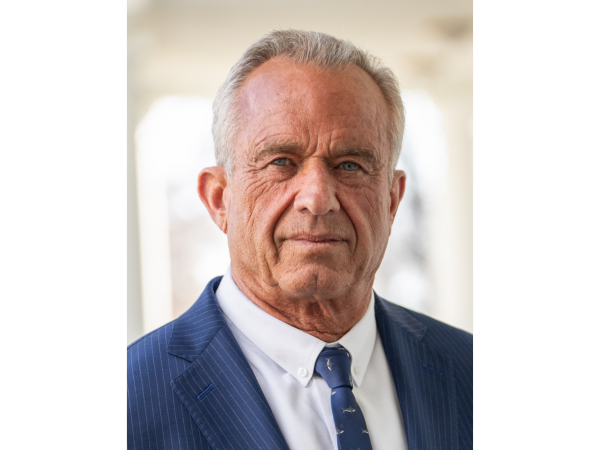
RFK Jr’s disinformation preceded his rise to lead the U.S. Department of Health and Human Services. He has turned measles, a childhood disease that had disappeared, into a health hazard in the U.S. and other countries. His anti-vaccine messaging and policies are reducing the number of people getting vaccinated in the United States. It is particularly disturbing in terms of the growing number of children who are not being vaccinated to protect them from vaccine-preventable diseases. He has singlehandedly defunded mRNA vaccine research in the United States. mRNA vaccines have played a preeminent role in containing COVID-19 during the recent global pandemic.
Where Disinformation is Killing People
The following table shows the negative impacts of his disinformation campaigns around the world:
| Country / Region | Affected Diseases | Remarks |
|---|---|---|
| United States (national; specific states: Texas, New Mexico, others) | Measles, polio (risk), and general childhood vaccine-preventable diseases (VPDs) | Rising measles outbreaks and localized deaths have been tied to increased vaccine hesitancy and permissive messaging; experts warn that polio vaccination coverage declines increase the risk of the disease re-emerging. |
| Samoa | Measles | Investigations and reporting link anti‑vaccine campaigning (including high‑profile visits and messages) to a collapse in vaccine coverage before the deadly 2019 measles outbreak that killed many children. |
| Other Pacific island nations | Regional vulnerability increased where external misinformation amplified local hesitancy and weakened coverage. | |
| Certain U.S. communities/localities with low vaccine uptake | Measles, whooping cough (pertussis), other VPDs | Local clusters with preexisting hesitancy saw disproportionate outbreaks after amplification of anti‑vaccine messaging sites. |
| International low‑coverage influenced by U.S. policy | Measles, polio, and broader routine immunizations | Public‑health experts warn that erosion of U.S. leadership and funding or rhetorical support for anti‑vaccine views could indirectly reduce program effectiveness abroad, risking routine immunization gains. |
| Canada (influencing policy and R&D exposure in some provinces) | Drops in the percentage of Canadians being vaccinated for influenza, RSV and COVID-19. | Commentaries and reporting flagged risks from defunding or policy shifts affecting mRNA program support and public confidence in vaccines. |
(Information source: Perplexity.ai)
Establishing Trust in Science
The Internet has made access to information universal. That includes the latest information about science and nonsense. David’s mission is to create simple, clear, reliable, common-sense reasoning for public consumption. He tackles misinformation and disinformation head-on to allay public fear and doubt. The goal is not to confront but to reassure.
Here are 12 messages to share for those who write and communicate science to the public. I promise to use more of them in future postings to the 21st Century Tech Blog site.
- Chemicals are not human-made. In fact, humans are made of chemicals.
- Just because it’s natural doesn’t mean it is good. Ebola is natural, but not so good.
- There are more carcinogens in a single cup of coffee than in the pesticide residues you ingest from eating an entire year’s worth of fruit and vegetables.
- There are more than 1,000 chemicals in a cup of coffee. Only 28 have been tested 28. Of these, 19 are carcinogenic to rats.
- Every meal you eat contains approximately 10,000 chemicals. We deal with this daily chemical cocktail exposure because that’s what our bodies do.
- When you read an article describing chemical exposures, a part per billion is equivalent to a drop of water in an Olympic swimming pool. Another way to say this is that a part per billion is like a second in 31 years.
- The dose makes the poison. A single aspirin can do a lot of good; 100, not so much. Another way to express this is that a daily bowl of cereal is okay, but eating 20 boxes daily, not so much.
- Correlation is not causality. The presence of a chemical does not mean that it causes a disease, any more than a rooster crowing causes the sun to rise.
- Risk management is part of daily life. When we cross a road, we are managing risk. Why? Because we have a goal and seek its benefits. Risk poses uncertainties, but risk can also be tied to benefits and yield new opportunities.
- Understand the differences in message labelling that often confuse. For example, “this chemical is produced naturally in the body,” meaning it is like a natural hormone, metabolite, or neurotransmitter familiar to it; or, “this chemical exists in nature,” meaning it can be found in plants, animals, microbes, etc.; or, “this chemical has been synthetically produced to remove impurities,” meaning it has been manufactured in a lab to yield molecules identical to those found in nature.
- Science doesn’t care about how you feel or what you believe. It seeks to discover the truth. Another way to say this is science isn’t democratic. It respects facts and evidence, not opinion.
- If a scientific hypothesis is proved wrong, scientists test another hypothesis, and then another, etc. Does a dogma or belief system do that?