
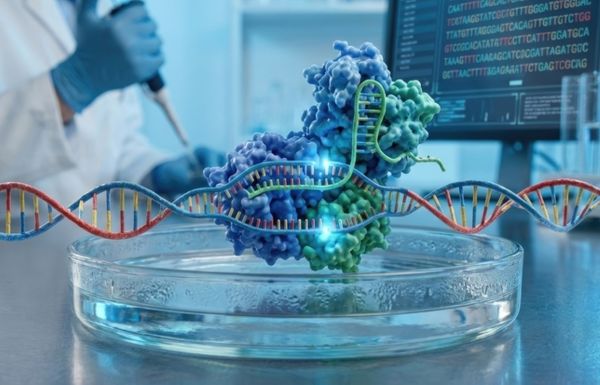
Neogenesis is the science of regeneration, the body’s ability to use stem-like cells to replace damaged organs and repair injuries. I got interested in this subject when my left knee joint suffered a stress injury on a walk with my two dogs. I limped back home and saw my doctor, who arranged to have X-rays, ultrasounds and an MRI done in that order. I had torn the medial collateral ligament and was bone-on-bone in the knee joint, with no perceptible cartilage.
For the next few years, I researched how to regrow the cartilage and scaffolding to rebuild the knee. If you are a frequent visitor to this site, you may recall posts on this subject, including this one.
I tried to enroll in a Toronto stem cell trial focused on knee replacement therapy, but it was full. The next closest trial was in Chicago. That was financially unfeasible.
Not wanting to face knee replacement surgery, I was referred to a rheumatologist who treated me with cortisone injections into the knee joint every six months. These restored my mobility, but the positive effects diminished over time. I needed a cane to get around as my lower leg bowed outward. It became clear that waiting for a regeneration cure for my knee was not in the cards.
The Neogenesis Revolution is at Hand
Neogenesis is much more than regrowing knees. Neogenesis is about regenerating organs, bones, connective tissue, blood vessels, neurons, skin and more. It goes well beyond repairing broken or diseased body parts. It fulfills the promise of restoring fully functioning body parts without surgical interventions, scar tissue, and potential long-term complications.
Neogenesis tools include:
- Gene sequence readers.
- Gene editors, i.e., CRISPR tools.
- Therapeutic protein inputs to bioengineer tissue.
- Directional tools to steer stem cells, organoids and other engineered tissue to where they are needed in the body.
- Machine learning added to provide design using artificial intelligence (AI).
What is Possible Today
Today, we can read our genetic code. We have CRISPR to snip out bad genes and replace them with healthy ones. We have therapies that engineer metabolic pathways to target cells. We grow stem cells and bioprint them to make mini versions of lungs, liver, pancreas, kidney and other body parts. We bioprint scaffolds for bones and cartilage. We can do this outside the body. Inside so far, not so much.
All of this is already here, but that is not enough as yet to make neogenesis possible for widespread medical use.
What is Aspirational for Tomorrow
Researchers are trying to do, and what doctors would like from them, is technology to grow replacement parts using a patient’s DNA profile. They also want to easily introduce replacement parts into patients’ bodies to repair accident and disease damage. To engineer cures for the most intractable diseases or the worst trauma would be right out of Star Trek science fiction.
Implications Beyond Medicine
If we can replace defective body parts with neogenesis, we can apply the same principles to all of biology. Think about staple crops and food security. Think about meat no longer harvested from livestock, but rather factory-produced.
Neogenesis could help reverse the human-caused mass extinction event taking place currently. It could even bring back the Dodo, the giant Moa, or the Woolly Mammoth.
Ethical Implications
Growing body parts or editing and recreating species comes with considerable ethical responsibilities. For example, if we can grow body parts, what’s to stop us from growing an entire human?
If we use neogenesis to reintroduce extinct species, what are the implications of such technology fixes on existing Earth ecosystems?
The potential harms from neogenesis could be many, including creating synthetic biology that decimates life on Earth.
New science and technological advancements like neogenesis need to be measured against the “Do No Harm” principle before deployment.
Do no harm doesn’t restrict advancements in science and technology.
It doesn’t mean scientists and technological wizards shouldn’t take risks.
What it does mean is that scientific and technological advancements should be justifiable, monitored, and reversible.
The need for guardrails to safeguard us and the planet from 21st-century technological and scientific advancements is palpable.
Frontier AI developers should take note.