Farmers today face both natural and human-created challenges. While they cannot control the weather, their fellow humans are contributing to making Earth more inhospitable each year by continuing to pump out atmospheric greenhouse gas (GHG) emissions. This continuing failure of humanity is consequential to farmers, farming families and workers, and the future of food security.
Besides trying to farm in increasingly unpredictable weather and climate conditions, farmers face other challenges. As climates change, so do farm environments. Crops that used to grow well suddenly don’t. New external threats arise that were formerly not present under previous climate conditions. For farming, farmers, farm workers and families, the consequential changes are significant.
Farm Population Exposure to Killer Chemicals
Farmers face two very different pressures: climate change and food demand. Climate change means the land they till is getting stress-tested by the environment. Global population growth means farms need to produce more on the same real estate.
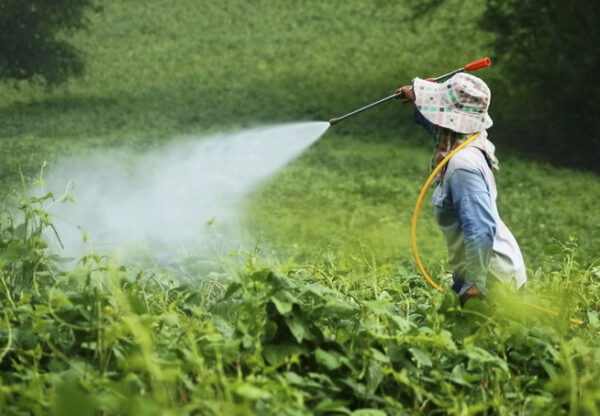
Global warming also comes with more than just negative weather-altering conditions. It creates new opportunities for crop-destroying opportunistic insects, other pests, fungi, and weeds to expand their ranges and flourish. If the invaders come with no natural predators following, their impact on farms can be devastating. That’s why farmers are using weapons from the chemical industry for relief. The result: routinely dosing crops with herbicides, fungicides, and pesticides. Pesticides can poison more than pests.
UAPP is Unintentional Acute Pesticide Poisoning. A September 1, 2026 article in Frontiers in Public Health describes a growing problem from pesticide use that, according to the World Health Organization (WHO), is driving widespread poisoning of farmers.
From worldwide farming data provided by the WHO, of an estimated 934 million people doing farming, most are subjected to pesticide spraying in fields annually, sometimes with several applications. The WHO states the net result is 385 million (46% of the total population) cases of UAPP annually and 20,000 deaths.
The article describes UAPP as an “ongoing major global public health challenge.” It is particularly true for Global South farmers and farm workers, where the highest percentage of UAPP gets reported. A good example is Burkina Faso, where 84% of farmers and farm workers are poisoned every year.
Growing exposure to farm pesticides has been linked to several diseases. One of them is Parkinson’s, on the rise in farm communities everywhere. An August 2026 article appearing in The Guardian described Parkinson’s as a farmer’s disease.
Pesticide Case Studies
Roundup (Glyphosate)
Probably the most controversial pesticide known by name is Roundup, developed by Monsanto and marketed beginning in 1974. Monsanto has been a magnet for environmental activists because of its aggressive marketing of the chemicals and agricultural products the company has produced. A word search on this site will yield interesting articles about Monsanto, genetically engineered crops, and the mythos that has arisen in opposition to the company.
In 1996, based on the successful market penetration of Roundup, Monsanto launched a line of Roundup Ready genetically engineered crops. Farmers could buy Monsanto-engineered seeds that would be unaffected by numerous applications of Roundup and produce maximum yields. The engineered seeds stimulated global sales for the herbicide. Today, Bayer owns Monsanto, having acquired the company in 2018. Bayer has assumed the burden of the discontent and Monsanto’s legacy reputation and notoriety associated wth glyphosate, the chemical weed killer in Roundup.
Claims have been linked to glyphosate and occurrences of non-Hodgkin’s Lymphoma and other cancers, rising cases of autism in the general population, increasing diagnoses of ADHD, Celiac Disease, Alzheimer’s, Type 2 Diabetes, immune diseases, depression and other neuropsychiatric conditions. Claims need scientific proof. All that the claimers can point to are flawed studies. Yet, even after independent, rigorous science and medical reviews show that glyphosate exposure doesn’t cause what has been claimed, the mythos remains.
Here is the reality. Overexposure to Roundup causes UAPP and, in some cases, can cause death, not cancer, not ADHD, not autism, etc. Hard data collected by Malaysia and Sri Lanka, tracking 4,548 and 601 UAPP cases associated with the use of Roundup, indicated 0.1% fatality rates in the former country and 3.2% in the latter. The data also noted that in many cases the victims died from intentional overdose exposure. In other words, suicide.
Lambda-cyhalothrin (Pyrethroids)
Probably the most popular type of farm insecticides are pyrethroids. They are widely used and liberally applied by farmers on vegetable and staple crops. They represent 17% of global agricultural pesticide sales. Widely used, it isn’t surprising to see pyrethroids show up in blood and urine samples taken from farm populations.
When a non-native invasive armyworm species from South America arrived in Africa in 2017, it marched across the continent unopposed. Armyworms are caterpillars that eat their way through corn, grain, rice, soybean and even pasture fodder crops like buzzsaws.
Pyrethroids have proven to be a chemical weapon capable of combating armyworms. Emergency spraying campaigns were used to target fields once visible damage could be spotted. Often that meant it was already too late. The alternative method to combat armyworms was to spot the moths during egg-laying and handpick them off the plants before they could hatch. Otherwise, the worms would rapidly advance across whole fields of crops, consuming everything in their path.
With the widespread use of pyrethroid spraying, there are many UAPP cases, but few are fatal. In the section above, we provided glyphosate overexposure deaths. A comparison with pyrethroids based on a Sri Lankan dataset showed that in 1,046 UAPP cases, fatality rates were 0.1%, significantly smaller numbers than with glyphosate overexposure.
No doubt, new environmental conditions will require new toolsets for farmers that will include chemical weapons. It is hard to imagine that a chemical created to selectively kill will not, from time to time, kill us as well.
In Part 2 of agricultural science in the 21st century, we will discuss the advent of super seeds and engineered microbes that could come to the rescue as climate change threatens food security.