
How Artificial Intelligence Is Changing Local and Global Agricultural Practices

0
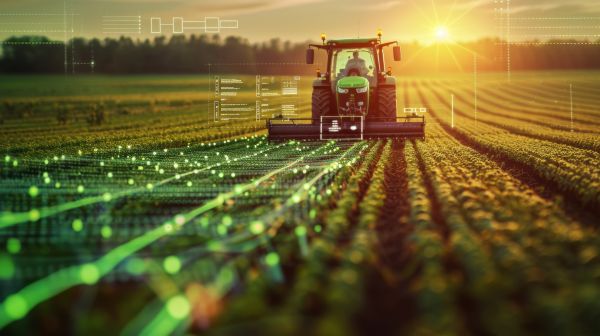
AI is placing an increasing role in addressing food insecurity in the face of climate change. (Image credit: 321700445 | Ai Image © Studioclever | Dreamstime.com)

Growing food insecurity and human-caused climate change are two sides of the same coin. As droughts, floods, heat domes, and polar vortices alter past seasonal normalities, farmers are facing unfamiliar scenarios, with many equipped with toolsets incapable of responding to a changing nature.

Farmers use lots of traditional tools in their kit to augment crop production. They have access to modern farming practices: no-till, fallowing, field rotation, mixed plantings, genetics, selective breeding, fertilizers, pesticides, herbicides, computers, field robots and aerial drones.

The latest addition is artificial intelligence (AI). Using traditional and AI tools is increasingly becoming common practice in agriculture when facing changing climate conditions.

Many farmers, meanwhile, continue to rely on generational judgment, knowledge and expertise developed from working the land. Whether in the Global North or South, traditional practices often supersede innovation.

For how much longer, I wonder?

Farming Risks in a Changing World

Modern farming today in North America is complex and high risk. How so?

  • Nature, weather, disease and climate change are increasingly becoming the greatest risks. Extreme events like floods, hail, heatwaves, coldwaves, early and late frosts, and wildfires threaten yields and long-term sustainability.
  • High material and resource costs include land purchases and leases, on-site buildings and storage facilities, fencing, drainage, waste management, equipment and other core infrastructure.
  • High working capital requirements and carrying costs to support cyclical income plus annual crop and animal husbandry outlays and production, with prices for seed, fertilizer, fuel, and more subject to market volatility.
  • Labour uncertainty with farmers requiring seasonal and migrant workers, the latter increasingly subject to restrictive immigration policies. The lack of seasonal workers can leave a crop unharvested in the field.
  • Supply chain dependency leaves farms subject to delays in third-party transportation of harvests to customers.
  • Pricing volatility turns what was well-priced at planting time into a loser at harvest.
  • Technology obsolescence represents a growing concern as farms increasingly rely on automation and surveillance equipment in the absence of human labour.
  • Shifting environmental, legal, and government regulations and investment programs have farmers facing liability exposure and income loss from changes and cancellations.

AI Comes to the Farm

As in almost every other industrial niche today, AI is front of mind. Where AI can help to mitigate the risks identified above, it is already at work.

Precision AI Tools

These provide agronomic insights and recommendations on where to plant, how much fertilizer to use, and when to irrigate.

CropX is one of several companies (The Climate Corporation, a Bayer subsidiary, and Taranis are competitors), offering AI‑driven nutrient and irrigation management platforms and other tools that aggregate data from multiple sources such as satellites, drones, field robots, soil sensors, weather sites and more.

Farmers can integrate soil probes, satellite data and crop models to help them improve yields with less irrigation or fertilizer requirements.

Disease and Pest Detection

These come on a variety of platforms including smartphone apps, autonomous drones, remote cameras and ground robots. They detect diseases and infestations earlier than humans and report, recommend or deliver treatment.

Trapview, as an example, is an AI tool whose algorithms and image recognition can do real-time insect counts and forecasts, and combine the data with weather forecasts to predict infestation outbreaks.

Ground Robots and Aerial Drones

There are an increasing number of standalone agribots and aerial drones focused on agriculture. In addition, older manually operated equipment is being retrofitted to include AI and digital navigation controls with apps for autonomous operations.

These technology platforms accurately georeference (they know where they are), identify crop hazards, do general weeding, provide targeted treatments for disease and infestations, sample soil conditions, and even harvest crops. They answer the seasonal labour shortage challenge.

With more bot providers cropping up every day, here is a short list in alphabetical order: Agrobot, Aigen, American Robotics, Blue River, Carbon Robotics, Farmdroid, Fendt Xaver, Fresh Fruit Robotics, Harvest Automation, Harvest Croo, John Deere, Monarch Tractor, Naïo Technologies, Nexus Robotics, the aforementioned Taranis, TerraClear, UAV Systems.

Greenhouse AI Systems

AI tools to monitor greenhouse agriculture represent a growing market segment. AI systems can monitor soil moisture, plant stress, temperature, light, and humidity. They can count potential yields and do deleafing and harvesting. Vendors in this sector include: Fravebot, GRoW, ioCrops, and Roya.

Decision‑Support and AI Advisory Systems

These AI tools include remote monitoring and mobile digital systems.

They integrate weather, soil, satellite indices and market data to advise farmers on planting dates, crop selection, fertilization, and risk management.

They are increasingly important for regions facing increasing climate variability and rising extreme weather events.

This list of vendors continues to grow and includes some of those that have already been mentioned as well as others, some from Global South Developers.

The list includes AgroStar, aWhere, Bayer, Biobest, Cedres Imaging, Cropwise, CropX, DeHaat, FarmWise, Gamaya, Granular, John Deere, OneWise, Taranis, and WiseYield.