
Please welcome Lou Farrell to the 21st Century Tech Blog. Lou is the senior editor of technology at Revolutionized Magazine. He has more than five years of experience writing about cutting-edge technological advancements and their impact. In this first article, he discusses the transformation occurring in manufacturing, construction, and engineering, using advanced technologies to create safe working environments.
Workplace safety technology continues to transform every industry. Tech companies are
building tools to increase productivity and leveraging advanced systems to reduce risk, prevent
accidents and protect workers. This is particularly prevalent in high-stakes environments, such
as manufacturing, construction and engineering.
From intelligent sensors to AI-driven monitoring systems, modern safety solutions are becoming more proactive, data-driven and adaptive.
1. Smart Sensors and the Industrial Internet of Things
One of the most significant advancements in workplace safety technology is the integration of
smart sensors through the Industrial Internet of Things (IIoT). Sensors are embedded into
machinery, wearable devices and infrastructure to monitor conditions in real time.
In manufacturing environments, IIoT sensors can detect anomalies such as gas leaks,
overheating equipment or unusual vibrations that may indicate mechanical failure. This
continuous collection and analysis of data enables predictive maintenance and allows
companies to fix issues before they escalate into dangerous situations.
Wearable sensors can track workers’ physical conditions, including heart rate, fatigue levels and exposure to hazardous substances. If a worker enters a restricted area or experiences signs of heat stress, alerts can be triggered immediately to reduce response times and prevent injury.
2. Interlock Systems in Equipment Safety
Interlock systems remain a cornerstone of safety in industrial and electronics manufacturing
environments. They can prevent accidental exposure to hazardous voltages and promote safer testing environments. Interlocked safety mechanisms instantly disconnect power when a
worker opens an enclosure or access panel. This process makes the device safe to touch and
removes the risk of human error.
Modern interlock systems are increasingly integrated with digital control systems, allowing for
real-time diagnostics and remote monitoring. They can also ensure compliance with safety
standards and greater operational transparency.
3. Computer Vision and AI-Powered Monitoring
Cameras equipped with artificial intelligence (AI) algorithms monitor environments and
identify unsafe behaviours or conditions in real time. For example, at a construction site or in a factory setting, computer vision systems detect whether workers are wearing proper personal
protective equipment (PPE). If the AI identifies a violation, it can issue alerts to supervisors or
even halt operations.
AI systems can analyze patterns over time to identify recurring risks. This workplace safety
technology enables organizations to shift from reactive safety measures to proactive risk
management strategies that address hazards before they lead to accidents.
4. Robotics and Human-Robot Collaboration
Collaborative robots, or cobots, have been designed to work beside humans, taking over
dangerous or physically demanding tasks. This reduces injury rates and allows workers to focus on higher-level tasks requiring critical thinking and leadership.
In manufacturing, cobots can handle tasks that could pose dangers for human workers,
such as heavy lifting, precision welding or hazardous material exposure risk. Cobots with advanced sensors and machine learning (ML) algorithms detect human presence and adjust their movements accordingly.
5. Augmented Reality for Training and Guidance
Training is a critical component of workplace safety, and augmented reality (AR) is transforming how it is delivered. AR enhances training by overlaying digital information, such as 3D models, checklists and IoT data, onto the physical world through smart glasses or headsets, providing workers with real-time guidance and instructions.
In complex engineering environments, AR headsets can guide technicians through maintenance procedures and provide step-by-step instructions, reducing the likelihood of errors. New employees can also benefit from immersive training simulations that replicate hazardous scenarios without exposing them to actual danger.
6. Drones for Hazard Inspection
Drones are increasingly being deployed to inspect hazardous or hard-to-reach areas, such as
tall structures, confined spaces or disaster zones. Equipped with high-resolution cameras and
sensors, drones can gather detailed data without putting human inspectors at risk.
In the oil and gas industries, workers today are using drones to monitor pipelines and offshore
platforms and identify issues such as corrosion or leaks. In construction, drones survey sites and assess structural integrity from safe distances. Their deployment is improving safety and efficiency by reducing the time and cost of manual inspections.
7. Digital Twins and Simulation Technology
Digital twin technology creates virtual replicas of physical systems. It simulates real-world
environments, allowing companies to test different scenarios and identify potential risks before they occur in the real world. This predictive capability allows organizations to design safer systems from the outset, rather than retrofitting solutions after problems arise.
For example, a digital twin of a manufacturing plant can be used to simulate equipment failures or emergencies. Engineers can analyze how these scenarios would impact worker safety and implement preventive measures accordingly.
8. Advanced Personal Protective Equipment
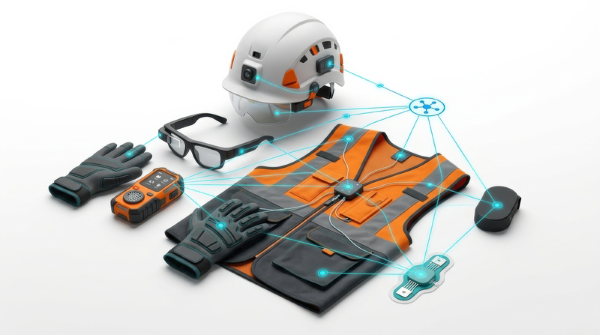
Personal protective equipment (PPE) has evolved significantly with the integration of smart technology. Modern PPE is especially useful in high-risk industries and environments.
Smart PPE include built-in sensors, internet connectivity and real-time feedback
mechanisms. Helmets come with augmented reality displays, communication tools and environmental sensors. Connected safety vests monitor worker location and send alerts in case of falls or accidents.