Please welcome back Lila Warren, a recent contributor to the 21st Century Tech Blog. This is her fourth article appearing here. All of them have been related to artificial intelligence (AI) and its impact on us in business, in our creative processes and on healthcare.
We are experiencing a strange new world today. Some have labelled it an attention economy, where technologies like digital devices and AI algorithms shorten human attention spans, turn off our ability to read beyond a few paragraphs on a screen, and rob us of our human intelligence and creativity.
The questions for all of us are where our addiction to technology is taking us, and who, other than the purveyors of AI, will ultimately benefit?
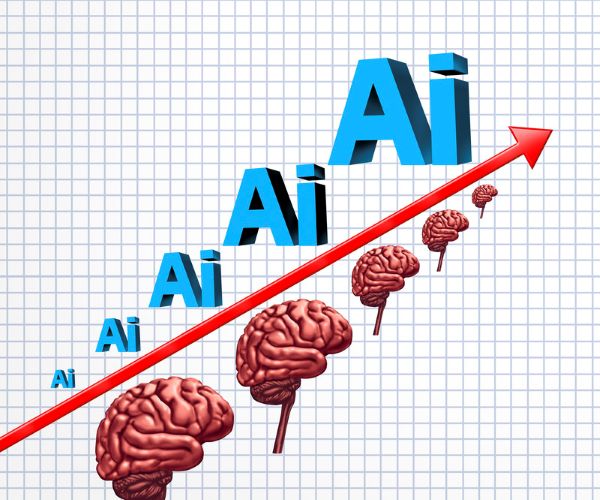
AI is rapidly becoming one of the most influential technologies in the 21st century. From generating written content and creating images to assisting with coding and data analysis, AI is changing how we work and create. Businesses are embracing it to increase efficiency. Students are using it to accelerate learning. Artists are experimenting with it as creative companions.
AI does provide benefits, but also concerns. Reliance on it is seen by many as a threat to human creativity. Creativity thrives on exploration, experimentation, trial and error, and personal interpretation.
AI is increasingly capable of producing content with minimal human input. Some worry that the habits and skills associated with original thinking and creativity will permanently go into decline. Already, we see evidence that overreliance on AI may meaningfully be reducing opportunities for creative development.
Convenience Can Replace Creative Problem Solving
One reason AI may be numbing creativity is that it often removes the need for people to solve problems independently. Creative thinking frequently emerges when individuals encounter obstacles and must develop original solutions. Whether writing a story, designing a marketing campaign, or creating art, the process of experimentation often leads to innovation.
AI can instantly provide suggestions, ideas, outlines, and completed drafts, which can save time. A consequence of its use is a reduction in the mental effort required to do creative tasks. Instead of brainstorming, users of AI may accept recommendations generated by a machine with very little personal human input.
Over time, this pattern of deference to AI thinking will weaken human creativity. Individuals who become accustomed to receiving AI answers are likely to spend less time exploring unconventional approaches or taking creative risks. The result is speedy efficiency at the expense of contemplative originality.
Homogenized Hybrid Outputs Becoming More Common
AI-generated content tends to follow a common set of patterns. AIs get trained on large datasets and generate responses based on digital information fed to them. The AIs are mostly reading human output to produce “new” content. Increasingly, they are reading AI-produced content, creating a law of diminishing returns.
When AI supersedes human input, the same information circulates. Marketing campaigns, blog articles, website designs, and social media posts start to feel predictable. Content may appear polished and professional, yet lack distinctive qualities that make it memorable.
In art, originality is traditionally celebrated because it introduces human audiences to something unexpected. When creatives are increasingly inspired by AI-generated content, uniqueness is subborned to the familiar. The artist may produce something technically impressive but creatively repetitive.
Artistic Skill May Be Lost
Creative disciplines typically require practice, patience, and persistence. Painters learn through years of experimentation with colours, textures, and techniques. Writers develop their own voices through repeated drafting and revision. Designers improve by exploring various concepts and learning from mistakes.
When AI handles significant portions of the creative process, opportunities for skills development diminish. When an aspiring artist relies heavily on image generators, they may spend less time mastering traditional techniques or understanding visual composition. Someone learning to paint might never fully appreciate the nuances involved in mixing colours such as blue acrylic paints to achieve a desired mood or effect.
The journey of learning is often where creative expression begins. By skipping portions of the journey, creators can likely produce output faster, but miss important experiences that contribute to their long-term artistic growth. Genuine expertise is built through active engagement, not simply through generating results.
Instant Gratification Can Discourage Deep Thinking
Creativity often requires extended periods of reflection. Great ideas are not always immediate. They can emerge after hours of research, observation, discussion, and revision. Many groundbreaking creative achievements were the result of sustained effort rather than instant inspiration.
AI produces faster workflows. Answers appear in seconds. Images are generated almost instantly. Content gets created at remarkable speed. While these efficiencies appear to be advantageous, they also foster the expectation that every creative challenge has an immediate solution.
Such a mindset may discourage deeper exploration. Instead of asking more questions, refining ideas, or experimenting with alternatives, users will settle for quick results. The habit of patient discovery, historically a driving force behind human innovation, will gradually weaken if convenience and speed become the primary goals.
The danger is not that AI creates poor work. Rather, it may reduce the amount of thoughtful engagement that often leads to truly exceptional work.
Our Human Experience Remains the Source of Our Creativity
AI still lacks the lived experience that shapes humanity. People draw inspiration from relationships, memories, emotions, personal struggles, cultural influences, and life events. These experiences give creative work its authenticity and emotional depth.
AI can imitate styles and generate impressive outputs, but it does not experience joy, loss, curiosity, or determination. Human creators bring these perspectives that cannot be replicated through data alone. The most impactful works of art, literature, and design often resonate because they communicate genuine human experiences.
For this reason, the most creative individuals will likely use AI as one of several technology tools rather than a replacement for imagination. As a technology, it may help enhance productivity, but it should not be a substitute for deeply personal insights that make creative work meaningful. The challenge for us in the 21st century is to recognize the responsible use of AI. It is not a replacement for human curiosity, experimentation, and mindsharing. In the end, human imagination is what serves our creativity, not algorithm substitutes.