Please welcome back Harper Lane, who is becoming a regular contributor to the 21st Century Tech Blog. She submitted this article, which addresses a very personal topic.
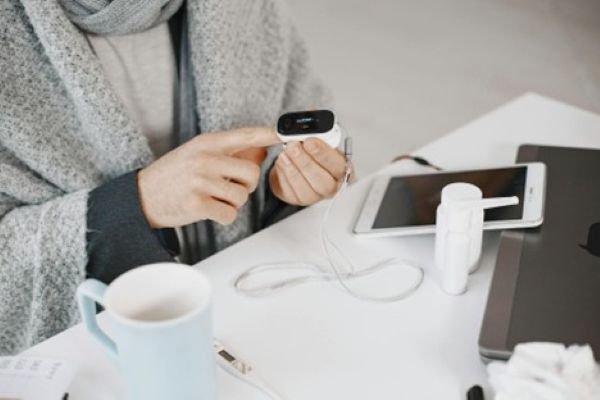
At age 77, I am one of the seniors who personally monitors my health using technology. Kardiamobile checks my heart rhythm. I have a home blood pressure cuff, a pulse oximeter, and even a stethoscope. When needed, I have worn medical devices that instantly reported health issues to my family doctor or specialists. Do you think this is paranoia, or just what seniors are doing today and a sign of the times?
Remote patient monitoring has come a long way from when my daughter, born with a congenital heart condition, was issued a portable ECG monitor with an acoustic coupler to phone in events to cardiologists at the Hospital for Sick Children in Toronto.
I’ll let Harper tell the rest of the story.
Senior care is no longer built around scheduled checkups and reactive decisions. Rather, it involves continuous data collection and real-time insight for proactive medical interventions. Some of the data comes from medical technology that seniors have purchased to collect and share with doctors. The rest comes from Remote Patient Monitoring (RPM) technologies supplied by hospitals and personal physicians.
The tools driving this shift to RPM and Predictive Analytics (PA) include devices such as wearables, in-home sensors, and other digital medical recording equipment capable of data broadcasting.
Combining RPM with PA involves using statistical models and machine learning algorithms to analyze received data, identify patterns, and forecast potential health risks or outcomes before they occur.
The two technologies enable care providers to move from reactive interventions to more proactive, data-informed decision-making. It means earlier responses, more personalized care, and improved overall outcomes for seniors.
The Architecture of Proactive Care
At its core, RPM operates like a distributed data collection system. Think wearable devices (smartwatches, fall-detection pendants), ambient sensors (motion detectors, bed sensors), and connected medical devices (glucometers, blood pressure cuffs) all feeding time-series data streams into centralized platforms.
After collection, the data is stored and processed. Edge computing allows some analysis to happen locally, for example, detecting an immediate fall. Cloud-based systems aggregate long-term trends.
The shift from reactive to proactive care comes from a layered architecture. Instead of waiting for a threshold breach like dangerously high blood pressure, RPM systems can flag gradual deviations from an individual’s baseline. A 5% drop in daily step count over two weeks, or a slight disruption in sleep cycles, can be subtle or easily explained away on an individual level. When analyzed together, however, they can form a predictive pattern.
Real-World RPM in Action
Imagine a senior living resident wearing a smartwatch that tracks heart rate variability, sleep quality, and movement. Over the course of several days, the system detects elevated resting heart rates combined with decreased activity and fragmented sleep.
In isolation, these metrics might not trigger concern. But RPM platforms use rule-based engines or machine learning (ML) models to correlate these variables. The system flags a moderate risk alert and notifies staff. A nurse checks in and discovers early signs of a respiratory infection. Antibiotics are administered before hospitalization becomes necessary.
Another example uses bed sensors to detect how often residents get up during the night. A sudden increase in frequency could indicate discomfort, medication side effects, or even an early urinary tract infection. Without RPM, the pattern might go unnoticed until the issue escalates. With it, intervention happens early.
PA: From Data to Foresight
If RPM is the data engine, PA is the interpretation layer. Predictive models use historical data combined with real-time inputs to generate educated forecasts.
For example, fall prediction models often incorporate variables like gait speed, prior fall history, medication types (especially sedatives), and even environmental data like lighting conditions. Using regression models or neural networks, these systems assign a continuously updated fall risk score.
In practice, this might mean dynamically adjusting a care plan. A resident flagged as high-risk may receive more frequent check-ins, physical therapy sessions, or environmental modifications like adding handrails in the bathroom or hallways. Importantly, these are targeted interventions, not blanket policies applied everywhere. This precision reduces unnecessary restrictions while increasing safety.
Complex Environments, Smarter Systems
In settings that provide assisted living and memory care, the complexity of care increases dramatically. Residents may experience cognitive decline, behavioural changes, or chronic health conditions that interact in unpredictable ways. This is where layered data models shine.
Take memory care, for example. PA can track behavioural patterns such as wandering frequency, agitation periods, or changes in routine. If a resident typically becomes restless in the late afternoon, a phenomenon called sundowning, PA can anticipate this and suggest preemptive interventions, like scheduling calming activities or adjusting lighting.
Another real-world application involves medication adherence. Smart dispensers can log when doses are taken or missed, feeding the information into predictive systems. If a pattern of missed medication correlates with confusion or fatigue, caregivers can intervene before health outcomes are affected. In these environments, the combination of RPM and PA becomes an early warning system.
Caregiver Decision Support Systems
One of the hugely important but less obvious impacts of RPM and PA is how these technologies augment caregiver decision-making. In technical terms, RPM and PA form a Clinical Decision Support System (CDSS).
Instead of relying solely on intuition or periodic assessments, caregivers receive data-driven insights prioritized by urgency. Dashboards display risk scores, trend lines, and anomaly alerts. For example:
- A colour-coded interface flags residents with rising fall risk.
- Trend graphs show declining mobility over time.
- Automated alerts highlight deviations from baseline vitals.
This doesn’t replace human judgment, but rather, augments it. A caregiver can walk into a shift already knowing where attention is needed most. That is transformative for staffing models and care quality.
Interoperability and Data Ecosystems
To truly understand the future of RPM, you must look at interoperability, the ability of different systems to communicate. Modern platforms are increasingly integrated with electronic health records (EHRs), pharmacy systems, and even hospital networks. As an example, a typical chain of events could follow this type of sequence:
- RPM detects abnormal vitals.
- Data is logged in the resident’s EHR.
- PA flags high hospitalization risk.
- A physician is automatically notified.
- A telehealth consultation is scheduled.
All of this can happen in hours, without manual coordination. The result is a closed-loop system where detection, analysis, and intervention are tightly integrated. It is the kind of interoperability that makes data-driven care scalable and sustainable.
Ethical and Human-Centred Design Considerations
Of course, with more data comes more responsibility. Privacy, consent, and data security are major considerations in RPM systems. Designers must ensure that monitoring feels supportive without being invasive.
There’s also the question of algorithmic bias. PA is only as good as the data it’s trained on, which means developers must carefully validate what it reports across diverse populations. Otherwise, risk scores may be less accurate for certain groups.
From a human-centred perspective, the goal is balance. Technology should fade into the background, enabling more human interaction, not less. In the best implementations, caregivers spend less time collecting data and more time connecting with residents. For a world with an aging population, the adoption of RPM and PA will mean a better daily quality of life for seniors.