
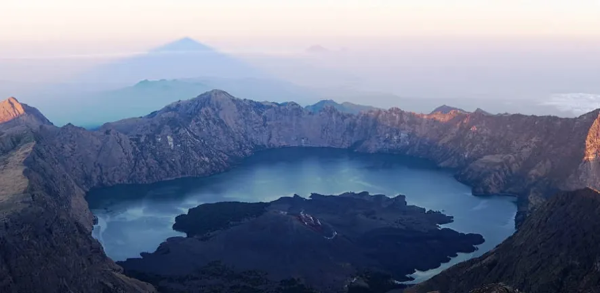
Have you ever heard of the Volcanic Explosivity Index (VEI)? I hadn’t until I read an article describing potential future volcanic eruptions and Yellowstone in Wyoming as the prime candidate.
VEI is the volcanologist equivalent to the earthquake Richter Scale. VEI goes from 1 to 8. Each number represents a logarithmic increase. So a VEI 5 produces volcanic ejecta amounting to a cubic kilometre. VEI 6 = 10 km³. VEI 7 = 100 km³. And VEI 8 = 1,000 km³.
A future Yellowstone eruption, based on a prehistoric eruption that occurred there some 631,000 years ago, would be a VEI 8. The ejecta, containing volcanic ash, gas, and other material, would reach 20 kilometres (12 miles) into Earth’s stratosphere.
Historic Eruptions of Note
Where VEI 8 future events may happen is along the Ring of Fire, a zone along the Pacific Rim that runs from Asia to the Americas. Three cataclysmic volcanic events in recent history happened along the Ring. They were the following:
- In 1991, Mount Pinatubo in the Philippines erupted. The pyroclastic flows and ashfall amounted to 5 cubic kilometres of material. Pinatubo caused almost 300 immediate deaths and more than 800 from the after-effects. The numbers weren’t as large as in previous eruptions of this size because of the coordinated action to evacuate tens of thousands within 15 kilometres of the volcano. Pinatubo was a VEI 6.
- In 1883, Indonesia’s Mount Krakatoa, also spelled Krakatau, erupted. Eyewitness reports at the time described a series of explosions raining hot pumice that landed on the decks of nearby ships. The penultimate eruption produced a noise heard in Australia, described as the loudest sound ever recorded in human history. The pressure wave caused by the eruption was felt around the world as it circled the planet six times. The tsunami the eruption unleashed struck the coastlines of Java and Sumatra, producing waves rising 37 to 40 metres and killing 36,000. Krakatau was a VEI 6.
- In 1815, another Indonesian volcano, Mount Tambora, erupted. Those living within the eruption zone had no warning, and an estimated 100,000 died. The planet recorded “A Year without Summer” following ash entering the upper atmosphere and causing temperatures to drop by an average of 1°C (1.8°F). Tambora was a VEI 7. A similar event happening in the next century is rated at 1 in 6.
What if We Experienced a VEI 8?
As bad as what the above eruptions produced, a VEI 8 will be much worse. Imagine 1,000 km³ of volcanic material entering the atmosphere and circling the planet for months. The impact on climate would last for years, not just a summer. Agricultural production would collapse. The challenge governments would face to ensure food security alone would be enormous. That’s not to say that our species wouldn’t survive. Undoubtedly, with enough forewarning, governments could prepare for such an event.
Where is a VEI 8 event likely to happen? Here are likely candidates:
- Yellowstone – lying in the state of Wyoming in the United States, Yellowstone is a park within a supervolcano, a significant shallow magma reservoir that last erupted 631,000 years ago. Prior eruptions occurred 1.3 million and 2.08 million years in the past. The cyclical recurrence of events approximately 600 to 700,000 years apart has some wondering if the next event is overdue. A recent article on Yellowstone appearing in SciTechDaily inspired me to research and write this posting. The article describes a sequence of events in a Yellowstone VEI 8 eruption and its aftermath. The eruption is described as laying waste to much of central North America and creating a global survival crisis.
- Lake Toba – on the island of Sumatra in Indonesia, Toba is a collapsed volcanic caldera that formed after an eruption 74,000 years ago. Estimates of the ejecta produced by it vary between 2,800 and 5,300 km³, making it the largest discovered VEI 8 event in the geological record. The lava flows covered more than 20,000 square kilometres. The eruption, some anthropologists believe, almost wiped out humanity, with only a few thousand of us surviving the long nuclear winter that followed. Today, Toba is seen as demonstrating VEI 8 capacity and, therefore, cannot be ignored even though it appears quiet at present.
- Taupō – a large volcanic caldera in New Zealand’s North Island last erupted 25,500 years ago, ejecting 530 km³ of volcanic material and leaving the collapsed caldera we see today. The ash spread over much of New Zealand, with pyroclastic flows hundreds of metres deep. Since the last mega eruption, Taupō has had smaller eruptions. One in 232 CE was a VEI 7 event. Recent eruptions have occurred since 1870. Currently, the volcano is sleeping.
- Campi Flegrei – located to the west of Naples, Italy, and close to its more famous neighbour, Mount Vesuvius, it is not one volcano, but rather a supervolcano system of fumaroles and geothermal hotspots. Part of it lies beneath Pozzuoli, a city on the outskirts of Naples. Its past has seen what is believed to have been the largest eruption ever to happen in Europe, some 200,000 years ago. The deposits from then covered most of Southern Italy and the Eastern Mediterranean. One of its vents erupted in 1538, creating Monte Nuovo, a small volcanic cone. It is likely to produce VEI 6, 7, and 8 events and shows signs of magma flows causing bradyseism, the slow rise and sinking of the land surface from underground fluid movement. The ground can rise as much as several metres before changes to the underlying magma cause subsidence.
- Aso Caldera – on the island of Kyushu in Japan erupted approximately 89,000 years ago, producing volumes that classify it as a VEI 8 event. The caldera is 25 by 18 kilometres in size, with its floor covered with farms, towns and infrastructure. Based on current analysis, a likely future event will not reach the same level of destructiveness.
- Aira Caldera – on the island of Kyushu, Aira is a supervolcano with an active cone called Sakurajima. The Aira Caldera formed during what is believed to have been a VEI 7 or 8 event 30,000 years ago. Sakurajima’s continued activity makes the caldera a VEI 8 candidate.
- Kikai Caldera – also found on Kyushu, Kikai last erupted 7,300 years ago in what has been classified as a VEI 7 event. It remains active and could produce a VEI 8 event.
- Kussharo Caldera – on the island of Hokkaido in Japan, Kussharo has seen several large eruptions approaching the VEI 8 range. Its last eruption was in the 8th century CE. Before that, it produced a major eruption 40,000 years ago. Kussharo formed between 340,000 and 30,000 years ago and remains a candidate for a future VEI 8 event.
Only an asteroid strike is seen to be potentially more devastating than VEI 8 supervolcano events. One of the former is credited with ending the Age of the Dinosaurs on Earth. The Chicxulub crater off the Yucatán Peninsula is what remains of that 66-million-year-old event that ushered in the Cretaceous-Paleogene extinction, wiping out 76% of life on Earth.


 measures eruptions and their intensity. The scale goes from 1 to 8, An 8 would be devastating.)