Using outer space for peaceful purposes was first defined in the 1967 Outer Space Treaty, which banned the use of nuclear and other weapons in space. In fact, other than maybe a personal sidearm, space was not to harbour weapons at all. The treaty banned outer space military bases and fortifications, whether in orbit or on celestial bodies.
The idea of a conflict-free outer space was aspirational. What the treaty did allow were technologies that could be dual-purposed. For example, GPS, first developed for terrestrial armed forces’ navigation needs, was not banned. Today, GPS and its equivalent satellite constellations from the European Space Agency, India and Russia have replaced maps.
Similarly, telecommunications satellites served two purposes: military and commercial. The advancement of the technology has produced telecommunications constellations like Starlink that serve domestic purposes in non-conflict zones, while helping Ukraine coordinate its defences against Russia in that conflict.
Another dual-purpose technology deployed to space is terrestrial observation satellites. Landsat satellites deployed by the United States benefited from similar reconnaissance technology developed for the American Air Force and Central Intelligence Agency.
Under the Outer Space Treaty terms, a nation’s military personnel could serve in space or on the Moon, Mars, asteroids or elsewhere. What they couldn’t do, however, was fire a weapon designed for aggression.
That was then. What follows is the now.
US Acknowledges Weapons “Deployed” to Space
On September 16, 2026, General Dan Caine, Chairman of the U.S. Joint Chiefs of Staff, in a keynote address delivered to a conference in Maryland, stated:
“Today’s modern battlefield operates from the seabed to cislunar space.”
While not explicitly admitting that the U.S. had deployed weapons to space, his comments appeared to confirm a recent public admission by a U.S. military official that America, through its Space Force, was establishing the means to defend the high ground of space from Earth orbit to the Moon.
Other Space Programs Preceded the US Weaponizing of Space
Caine’s public admission is the first of its kind for any nation. It is likely, however, that deploying weapons to space has already been done by Russia and China. Both of these countries have demonstrated space defence weapons:
- China has launched an anti-satellite missile in 2007 that destroyed one of its own weather satellites.
- Russia has launched a ground-based anti-satellite missile in 2021 to destroy one of its own satellites.
- Russia has “inspection” satellites that can shadow spacecraft from other countries. Although there is no indication these satellites are armed, they could easily be militarized or collide with a target.
European space programs, including ESA, have never demonstrated similar inclinations.
The distinction between what China and Russia have done is that Caine’s disclosure is about in-orbit space weapons, not Earth-based systems that could target objects in space.
Weaponizing Space to Control the High Ground
What are we talking about when referring to weapons deployed in orbit or on the Moon?
Although Caine didn’t mention anything specific, the likely systems already in space or to be deployed include:
- Weapons designed to jam enemy satellites to interfere with communications and data up- and downlinks.
- Electromagnetic weapons designed to disable satellite electronics.
- Cyberweapons to scramble satellite software.
- Kinetic weapons to destroy or damage a satellite.
- Maneuverable weapons to rendezvous with enemy satellites.
- Arming critical satellites for self-defence.
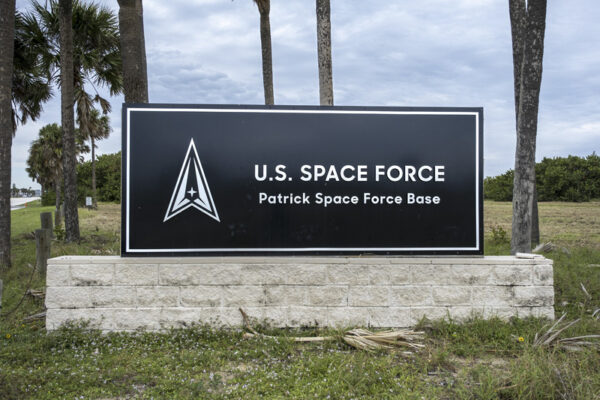
Of course, Caine may have disclosed capability rather than reality. Although not inevitable, when the US first announced its sixth armed service, the Space Force, orbital weapons would be the likely endgame.
When formed in December of 2019, its announced mission was to train the American military for warfighting in space and to develop military space systems to project the country’s power beyond Earth. At the time, the major initiatives of the Space Force were to develop launch capacity, a successor to GPS, new satellite communication capabilities, and a space-based early warning system capable of detecting incoming missiles.
It appears that the mission of the US Space Force has now expanded and will likely stimulate Russia, China and other nascent military space programs to up their game.