
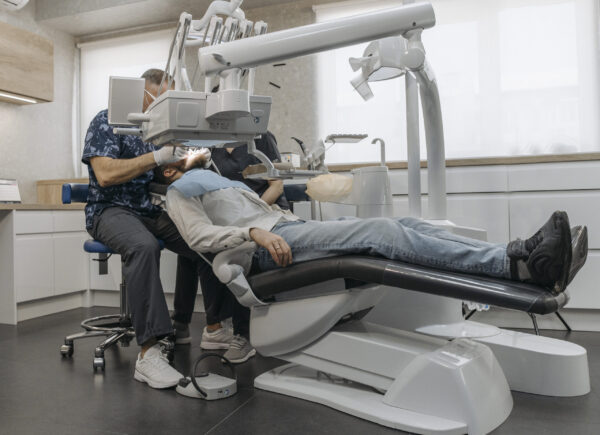
Please welcome back Paige Linton to the 21st Century Tech Blog. This is the third of her articles I am publishing on this site. It discusses advancements in dental technology.
Many dread a trip to the dentist. Our Toronto-based dentist retired last year, leaving us in search of someone new. Our first choice was a practice jammed with the imaging technologies that Paige references in her article. It is impressive stuff. But what I found missing in this very busy practice was a personal rapport and understanding of individual patient needs.
So now, my wife and I have decided to find another dental practice. A good rule for us has been to visit practices and talk with the dental team before committing. That’s exactly what we recently did. We will soon see the proof in the pudding with our first appointments.
One thing is certain, dentistry is dramatically changing, and Paige’s description that follows describes just how much.
Dentistry is undergoing a remarkable transformation. Over the past few decades, how dentists diagnose, treat, and manage patient care has fundamentally changed.
Technological innovations have shifted dentistry from relying primarily on manual techniques and basic imaging to using sophisticated digital imaging and artificial intelligence (AI). From the moment an appointment is scheduled through visits and follow-up care, today’s dentistry beyond the chair looks vastly different from a generation ago.
Digital Imaging and 3D Visualization
Today’s digital imaging systems provide far superior clarity and detail when compared to traditional dental X-rays. Cone beam computed tomography (CBCT) scanners create three-dimensional images of the jaw, teeth, and facial structures, allowing dentists to plan complex procedures with precision that was previously impossible. These systems significantly reduce radiation exposure while delivering images that reveal details hidden in conventional radiographs.
For example, CBCT technology lets oral surgeons map the exact location of nerves before implant placement, minimizing complications and improving safety. In a Sacramento, California-based practice, patients seeking dental implants benefit from precision imaging, with accurate 3D mapping, helping in implant placements and reducing procedural risks.
Digital imaging also means patients’ records can be securely stored electronically, retrieved instantly, and easily shared with specialists when needed.
Intraoral Cameras and CAD/CAM Technology
Intraoral cameras enhance patient communication and clinical documentation. These small, handheld cameras allow dentists to show magnified views to the patient of their teeth and gums, helping them to understand their treatment needs and involving them more in their own personal care.
Simultaneously, computer-aided design and computer-aided manufacturing (CAD/CAM) technology is revolutionizing dental restorations. Dentists can now scan a prepared tooth, design a crown or restoration on a computer, and mill it in the office within a single appointment, eliminating the need for temporary restorations and multiple visits. This technology reduces chair time and improves the fit and aesthetic quality of restorations.
Laser Dentistry and Minimally Invasive Procedures
The use of laser in dentistry is creating new ways to treat dental problems and supports the growing trend and philosophy to preserve healthy tooth structures whenever possible. Laser use means less trauma to surrounding tissues.
What kind of procedures are we talking about?
- Lasers can be used for soft tissue procedures like gum shaping, removing inflamed tissue, and treating canker sores with minimal bleeding, reducing healing times.
- Lasers can prepare a tooth for fillings without producing the noise and vibration of traditional drills, a more comfortable experience for patients who experience dental anxiety.
- Lasers can be used adjunctively in periodontal therapy and endodontics to improve outcomes and patient comfort.
As laser technology becomes more accessible and refined, expect to see widespread adoption.
AI and Diagnostic Tools
How can dentists use AI? Two key areas are assistance in diagnosis and treatment planning.
AI-powered software can analyze radiographs and detect cavities, bone loss, and other pathologies, serving as a secondary review for the dentist and helping catch problems that might otherwise be missed.
Today, AIs trained on thousands of images can identify subtle patterns that contribute to more comprehensive diagnoses.
Machine learning (ML) algorithms can predict which patients may be at higher risk for certain dental conditions, enabling more proactive treatment approaches.
While these AI tools do not replace a dentist’s judgment and expertise, they do enhance it by providing data-driven insights to support clinical decision-making.
Expect to see AI tools become integrated into practice management software. The results should improve diagnostic accuracy and allow dentists to dedicate more time to providing patient care.
Teledentistry and Remote Consultations
Delivering dental care to those in remote areas or with mobility limitations is fueling the rise of teledentistry.
Teledentistry uses secure video conferencing technology to visit patients virtually, to consult about symptoms, to make preliminary evaluations, and finally, to determine whether an in-person visit is necessary.
Some follow-up appointments and routine consultations can now happen remotely, reducing travel burdens for patients and improving appointment efficiency.
Teledentistry also facilitates specialist consultations, allowing general dentists to connect with orthodontists or other specialists without requiring patients to visit multiple offices.
While teledentistry cannot replace hands-on clinical work, it is a valuable complement to traditional in-office care and is becoming especially relevant as the profession seeks ways to improve access and reduce barriers to oral health care in the 21st century.