Paige Linton is a freelance writer. She is interested in culture, creativity and how technological and scientific advances impact everyday life. Paige likes explaining complex things and issues and sharing her thoughts with readers. In this, her second posting to the 21st Century Tech Blog, Paige has chosen to talk about how technological and scientific advances in the 21st century are impacting the beauty and personal care industry.
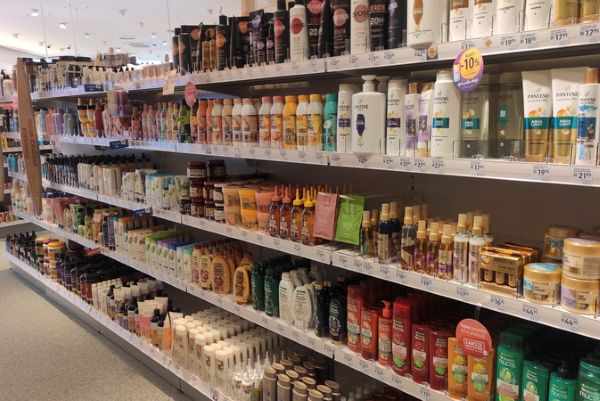
The beauty and personal care industry includes products developed for skin, hair, cosmetics and fragrances. The estimated number for beauty and personal care product revenue in 2025 was US$ 677 billion and growing 8% annually.
While significant, a comparison to other business sectors puts consumer electronics at 28% more, or $865 billion in 2025, a third the size of clothing and apparel, and two-fifths that of pharmaceuticals.
I’ll let Paige tell you how technology, science and societal concerns are continuing to influence the industry as the 21st century unfolds.
Tech Breakthroughs Changing Beauty
The beauty industry has evolved with shifts in culture and consumer demand. The pace of change in recent years has been unlike anything seen before because technology has become deeply embedded in how people discover, test, purchase, and apply beauty products.
From artificial intelligence (AI) to biotechnology, every corner of the market is being reshaped. These are not passing novelties, but rather meaningful changes affecting how we interact with beauty in our daily lives.
AI-Powered Skin Analysis and Personalization
AI is moving from research laboratories into bathroom medicine cabinets at remarkable speed. Brands today deploy AI-powered diagnostic tools that analyze skin tone, texture, hydration levels, and early signs of aging using nothing more than smartphone cameras.
These tools collect data points that dermatologists once needed specialized equipment to assess, making professional-grade skin analysis accessible to a much broader audience. Based on the results, algorithms recommend personalized product regimens tailored to individual skin profiles. This shift toward customization means consumers spend less money on products that do not work for them, reducing waste and improving overall satisfaction.
Virtual Try-On Technology and Augmented Reality
Augmented reality is solving a persistent frustration of beauty retail: an inability to test a product before committing to its purchase. Major platforms and brands now offer AR-powered virtual try-on tools that overlay realistic simulations of lipstick, eyeshadow, foundation, and even hair colour in a live camera feed. The technology is sophisticated enough to account for lighting conditions, skin undertones, and facial structure, making results genuinely useful rather than approximate. Retailers report that customers using these tools produce higher conversion rates and return fewer products. As the technology continues to improve, the gap between a virtual experience and an in-store consultation is narrowing considerably.
Biotech and Lab-Grown Ingredients
Behind the formulations of many modern beauty products lies a biotechnology revolution. Today, scientists are growing ingredients in controlled environments that were once harvested from rare plants, marine organisms, and animals, reducing both the environmental cost and the ethical complications of traditional sourcing. This approach also produces ingredients with greater purity and consistency than what nature alone can provide.
Lab-grown squalane, fermented hyaluronic acid, and biosynthetic retinol are just a few examples offered today, formulated through biotech processes. Consumers are increasingly receptive to using these products because they align with growing concerns about sustainability.
Smart Hair Care and Diagnostic Devices
Hair care technology has advanced well beyond traditional styling tools, with smart devices now offering real-time feedback and genuinely adaptive performance. Intelligent hairbrushes equipped with sensors can detect breakage, measure scalp health, and assess moisture levels during a regular brushing session, transmitting that data directly to a connected app.
Smart styling tools, meanwhile, automatically adjust their heat output based on hair thickness and condition, reducing the cumulative risk of hair damage. Brands are also investing in scalp diagnostic kits to identify concerns such as excess sebum production, thinning, or follicle health issues before they become visible problems. This level of data-driven care is shifting how people approach hair health as an ongoing practice rather than an occasional treatment. Consumers are making more informed choices about the products and tools they invest in, whether that involves styling devices, scalp treatments, or quality hair extensions for added length and volume.
Packaging Redefined for Sustainability
Sustainability is a defining concern in the beauty industry. Technological innovation offers practical, scalable solutions to packaging, a waste management concern.
Brands are experimenting with water-soluble films, mushroom-based materials, and refillable systems that dramatically reduce single-use plastic consumption.
Some companies are using blockchain technology to provide consumers with full supply chain transparency, allowing them to trace a product from its raw ingredients to the finished item on the shelf.
3D printing is being deployed to produce on-demand packaging, cutting down on overproduction and excess inventory sitting in warehouses.
These are genuine engineering challenges requiring significant investment in research and infrastructure, not simply marketing strategies. Companies leading this effort are finding that thoughtful, eco-conscious packaging is a meaningful differentiator for this increasingly competitive market.
What the Future Holds
Today, beauty technology is no longer a fringe conversation happening at industry conferences. It is actively shaping product development, retail experiences, supply chains, and consumer behaviour.
The convergence of AI, augmented reality, biotechnology, smart devices, and sustainable engineering represents a transformation rather than a short-term trend.
For consumers and the industry, continuous change represents the future for beauty and personal care products. Drivers of what will soon be a trillion-dollar industry as the 21st century unfolds include an aging population, greater social and cultural diversity, concerns about environmental sustainability, and advances in medical science and other scientific and technological fields.