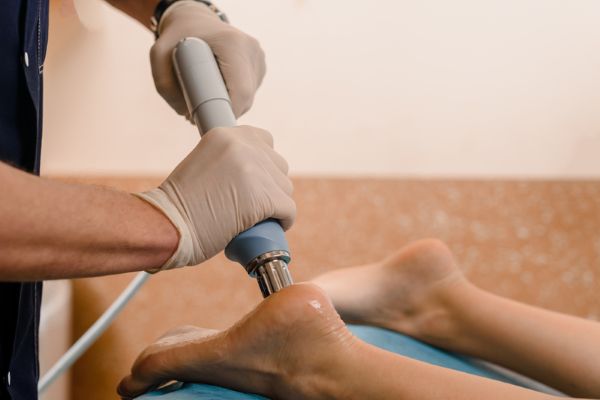
Modern medicine is undergoing a profound and necessary shift. We are moving away from surgical interventions and towards continuous, non-invasive care models. As healthcare systems adapt to an ageing demographic, the reliance on technology for proactive eldercare is increasing, paving the way for advanced therapies to replace invasive surgeries entirely. Keeping older adults mobile and independent is a top priority, making alternatives to traditional orthopedic surgery a critical focus for biomedical engineers.
Among the most promising of these innovations is acoustic wave technology, specifically known in the medical field as Extracorporeal Shockwave Therapy (ESWT). Once reserved solely for elite athletes recovering from sports injuries, this biomedical engineering marvel is now widely accessible. It offers unprecedented relief for various chronic musculoskeletal conditions without extended hospital stays.
ESWT uses high-energy acoustic waves to stimulate healing and decrease pain in injuries to tendons, ligaments, cartilage and bones. It’s a therapy that has gone mainstream in Europe and is seeing greater use in North America and elsewhere. For athletes, ESWT lets them continue training and participate in sports while undergoing therapy.
The Rise of Accessible Biomedical Treatments
The democratization of smart medical devices has fundamentally altered patient expectations globally. People no longer accept long surgical recovery times as a mandatory consequence of joint or tendon degradation. Instead, clinical focus has pivoted towards regenerative medicine that works in harmony with the human body. ESWT utilizes high-energy sound waves to stimulate the body’s natural healing cascade, providing a safe alternative to scalpel-based procedures.
As equipment manufacturing becomes more refined and cost-effective, more regional health clinics in the United Kingdom can now offer acoustic wave therapeutic treatments previously only available in major metropolitan research hospitals.
For example, a patient suffering from debilitating heel pain can, today, easily access plantar fascia shockwave treatment. This localized accessibility highlights how advanced biomedical engineering directly improves everyday patient outcomes without requiring hospital admission or extended periods of downtime. It is a perfect illustration of formerly limited high-end medical technology becoming available to benefit the general public.
The Physics Behind Cellular Regeneration
To truly appreciate why acoustic wave therapies are so effective, it is essential to understand the underlying physics and biological interactions. When a clinical device emits acoustic waves, these rapid pulses propagate deep into targeted musculoskeletal tissues. The energy transfer creates controlled micro-trauma at the cellular level. This process paradoxically initiates a powerful and highly beneficial regenerative response.
According to recent peer-reviewed research published in the Journal of Clinical Orthopedics and Trauma (JCOT), extracorporeal shockwave therapy is being used to trigger mechanotransduction to promote musculoskeletal regeneration. The biological process is stimulated to produce angiogenesis, the formation of new blood vessels, protein biosynthesis, and significant cell proliferation.
Tendons and ligaments notoriously suffer from poor natural blood supply, which is why injuries in these areas often last for months or years. By stimulating angiogenesis, acoustic wave therapy delivers fresh oxygen and vital nutrients directly to the damaged site. Furthermore, the acoustic pulses help to mechanically break down stubborn calcium deposits within tendons, restoring mobility and elasticity to stiffened joints.
Key Advantages Over Traditional Interventions
The transition from traditional orthopedic surgery to acoustic wave therapy yields highly tangible clinical benefits. As biomedical technologies continue to evolve rapidly, non-invasive solutions consistently demonstrate superior safety profiles.
The primary advantages of adopting this acoustic technology include:
- Elimination of surgical risks: By avoiding scalpels and incisions entirely, patients completely bypass the risks of hospital-acquired infections, anesthesia complications, and prolonged wound management.
- Accelerated recovery timelines: Traditional tendon repairs can require months of strict immobilization and physical therapy. Acoustic wave therapy allows patients to bear weight immediately and return to their daily activities with minimal disruption.
- Systemic cost-effectiveness: Outpatient clinical sessions reduce the financial burden placed on individual patients and the healthcare system.
- Targeted pain alleviation: The acoustic pulses actively disrupt pain neurotransmitters in the affected area, providing both immediate and long-term relief from chronic discomfort.
The Future of Non-Invasive Orthopedics
As digital health and biomedical engineering continue to intersect, the potential for acoustic wave technology will only expand further. Researchers are exploring how to combine ESWT with other regenerative treatments, such as targeted stem cell therapies, to accelerate tissue repair. Furthermore, the future integration of artificial intelligence (AI) in diagnostic imaging will soon allow clinicians to map musculoskeletal damage with microscopic precision. This advancement will guide acoustic waves to the exact epicentre of cellular degradation with pinpoint accuracy.
Ultimately, the normalization of non-invasive treatments reflects a much larger triumph of medical technology. By harnessing the physical properties of sound to repair the human body, clinical engineering is extending our physical longevity, supporting an ageing population, and fundamentally redefining what is possible in modern orthopedic care.